Hoppin' John may echo a Senegalese rice dish
In the southern United States, Hoppin' John eaten with collard greens on New Year's Day is thought to bring a prosperous year filled with luck. The dish began with the Gullah people of the Lowcountry. What African roots shaped this rice and beans dish before it spread across the South?
2 articles, 1 book
The reading path
- ReadHoppin' John · Wikipedia
Hoppin' John may have evolved from rice and bean mixtures that were the subsistence of enslaved West Africans en route to the Americas. Hoppin' John originated from the Gullah people as a Lowcountry one-pot dish before spreading to the entire population of the South. It may have been further traced to similar foods in West Africa, in particular the Senegalese dish thiebou niebe. Recollections of a Southern Matron mentions "Hopping John" as early as 1838, defining it in a note as "bacon and rice", nine years before the recipe in The Carolina Housewife (1847). In the southern United States, eating Hoppin' John with collard greens on New Year's Day is thought to bring a prosperous year filled with luck. The peas stand for pennies or coins, and a coin is sometimes added to the pot or left under the dinner bowls.
- ReadHoppin' John Recipe and History · What's Cooking America
Black-eyed peas, also called cow peas, are thought to have been introduced to America by enslaved Africans who worked the rice plantations. The first written recipe for Hoppin John appeared in The Carolina Housewife in 1847. Most food historians generally agree that Hoppin John is an American dish with African/French/Caribbean roots.
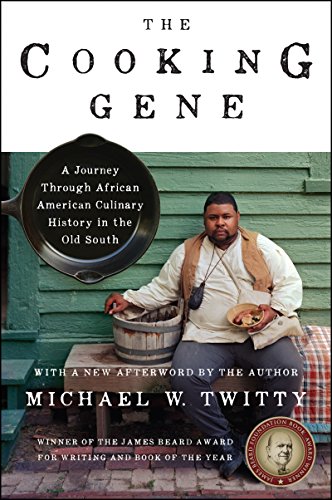
- BookThe Cooking Gene · Bookshop.org
The Cooking Gene by Michael W. Twitty traces his family story through foods that enabled his ancestors' survival across three centuries, using stories, recipes, genetic tests, and historical documents. This places Southern cuisine in the context of family history and the charged politics surrounding soul food's origins.


Book links are Bookshop.org affiliate links. Curiate may earn a commission on purchases, at no extra cost to you — Bookshop.org also gives a share to independent bookshops.
Reading paths, built to arrive somewhere
Curiate turns what you are curious about into a short path — a quick lesson on an article, something to watch, and a book to go deep on. Free to browse.