How biostatistics makes biological evidence meaningful
Biostatistics is closely related to medical statistics. These lessons answer how statistical reasoning helps make biological evidence meaningful and support conclusions in research. They move through sampling, experimental design, and the challenges of interpreting complex data.
2 articles, 1 book · about 30 min of reading and viewing
The reading path
- Readbiostatistics · Wikipedia · 28 min read
In biostatistics, it is not possible to take measures from all the elements of a population. Because of that, the sampling process is very important for statistical inference. In high-throughput biostatistics, multicollinearity often occurs: predictors such as gene expression levels can be so highly intercorrelated that the information in one predictor might be contained in another. Careful analysis with biostatistical methods is required to separate the signal from the noise.
- ReadStatistics study guide: biostatistics, sampling, experiments | Notes · pearson.com · 2 min read
Biostatistics provides the framework for making evidence-based conclusions in medical and public health research. It helps answer questions such as whether a new drug reduces pain in patients with sickle cell disease.
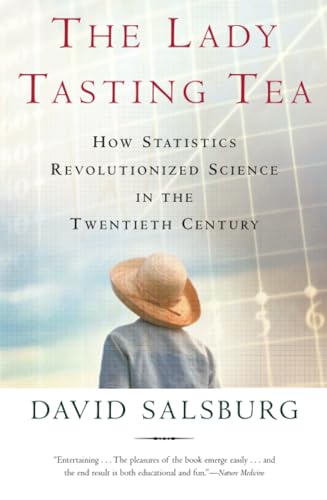
- BookThe Lady Tasting Tea: How Statistics Revolutionized Science in the Twentieth Century · Bookshop.org
The Lady Tasting Tea by David Salsburg discusses how statistics changed twentieth-century science through the theories and ideas of famous scientists and thinkers.

Book links are Bookshop.org affiliate links. Curiate may earn a commission on purchases, at no extra cost to you — Bookshop.org also gives a share to independent bookshops.
Reading paths, built to arrive somewhere
Curiate turns what you are curious about into a short path — a quick lesson on an article, something to watch, and a book to go deep on. Free to browse.