How catholicism balances authority with change
Catholicism is the faith of the Catholic Church, the largest Christian church, which holds that it is the one, holy, catholic and apostolic Church founded by Jesus Christ. The Church had an estimated 1.28 to 1.41 billion baptized members worldwide as of 2026, and these lessons help readers understand how Catholic authority meets change.
3 articles, 1 book · about 1 hr 59 min of reading and viewing
The reading path
- Readcatholicism · Wikipedia · 60+ min read
The Second Vatican Council (1962 to 1965) introduced the most significant changes to Catholic practices since the Council of Trent, four centuries before. Initiated by Pope John XXIII, it modernized Catholic practices, allowing the Mass to be said in the vernacular (local language) and encouraging "fully conscious, and active participation in liturgical celebrations". Eparchy is a geographic area under a bishop's jurisdiction. Eastern Catholic Churches are in full communion with the pope, with separate governance and liturgical traditions; some are organized as individual eparchies. In the 11th century, Hildebrand of Sovana helped establish the College of Cardinals to elect new popes, starting with Pope Alexander II in the papal election of 1061. When Alexander II died, Hildebrand was elected to succeed him, as Pope Gregory VII.
- ReadHow Anti-Catholicism Created an American Saint - JSTOR Daily · JSTOR Daily · 3 min read
Catholic saintmaking became more centralized in 1634, requiring evidence of "heroic holiness," including evidence of miraculous healings and a "devil's advocate" to argue against canonization.
- ReadFive Ways Pope Francis, Religious Leader Who Pushed to Modernize the Catholic Church, Was a Man of Firsts · Smithsonian Science · 8 min read
Pope Francis pushed the Catholic Church to modernize during his 12 years as pope, facing resistance from conservatives who believed his reforms went too far and liberals who argued they didn't go far enough. He rejected his predecessors' traditionalism, emphasizing humility, charity to the poor, and outreach to marginalized groups and adherents of different faiths.
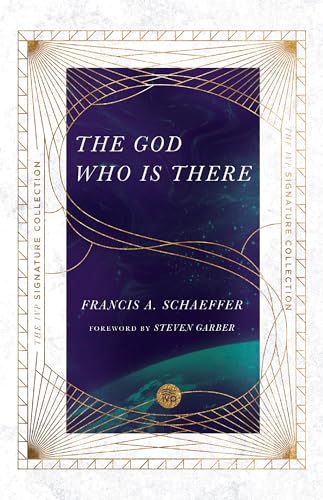
- BookThe God Who Is There · Bookshop.org
The God Who Is There by Francis Schaeffer is a Christian apologetic work, published in 1968, by a writer who promoted a presuppositional approach to defending the faith.


Book links are Bookshop.org affiliate links. Curiate may earn a commission on purchases, at no extra cost to you — Bookshop.org also gives a share to independent bookshops.
Reading paths, built to arrive somewhere
Curiate turns what you are curious about into a short path — a quick lesson on an article, something to watch, and a book to go deep on. Free to browse.