How the history of the reformation reshaped a divided church
The Reformation was a major movement in 16th-century Western Christianity that challenged the papacy and Catholic Church hierarchy, and is usually dated from Martin Luther's publication of the Ninety-five Theses in 1517. The lessons help readers understand how reform unfolded within a divided church and what reformers sought to change. They follow efforts to reform the church amid competing movements and divisions.
2 articles, 1 video, 1 book · about 2 hr 38 min of reading and viewing
The reading path
- Readthe history of the reformation · Wikipedia · 60+ min read
In the 16th-century context, the term mainly covers four major movements: Lutheranism, Calvinism, the Radical Reformation, and the Catholic Reformation or Counter-Reformation. The Counter-Reformation comprised the Catholic response to the Reformation; since the late 20th century, historians often use the plural to emphasize that it resulted from parallel movements, not a uniform and coherent historical phenomenon. The necessity of church reform "in head and limbs" was frequently discussed at ecumenical councils from the late 13th century. These efforts to reform the church from within a divided church faced resistance from many high stakeholders, including popes, prelates, abbots and kings, who preferred the status quo because they did not want to lose privileges or revenues. Lorenzo Valla (1407 to 1457) convincingly demonstrated that the allegedly 4th-century Donation of Constantine, a basic document of papal authority, was a medieval forgery, calling into question the reliability of some fundamental texts of papal privilege.
- Read"How the Reformation Failed" · theopolisinstitute.com · 6 min read
The Reformation partly provoked a significant reformation of its own in the Catholic church.
- WatchThe Protestant Reformation: Crash Course European History #6 · YouTube · 16 min watch
The Catholic Church in Europe split over tensions and protests that led to the Protestant Reformation, and the split continued beyond Martin Luther. The growth of multiple Protestant sects followed.
- BookThe Reformation: A History · Bookshop.org
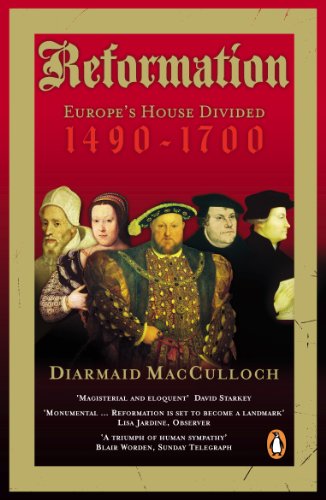
The Reformation by Diarmaid MacCulloch surveys the European Reformation between 1490 and 1700.


Book links are Bookshop.org affiliate links. Curiate may earn a commission on purchases, at no extra cost to you — Bookshop.org also gives a share to independent bookshops.
Reading paths, built to arrive somewhere
Curiate turns what you are curious about into a short path — a quick lesson on an article, something to watch, and a book to go deep on. Free to browse.