How cosmology reveals the universe's history
Cosmology is the study of the nature of the universe, including its history, structure, dynamics, fate and governing physical laws. The lessons answer how evidence helps reveal the universe's history, building an understanding of how observations support accounts of cosmic change. They connect different kinds of evidence to the broader story of the universe.
3 articles, 1 book · about 36 min of reading and viewing
The reading path
- Readcosmology · Wikipedia · 13 min read
The origins of ancient Greek cosmology, according to historian of philosophy Charles Kahn, lie with Anaximander. Religious or mythological cosmology draws on beliefs in mythological, religious, and esoteric literature and traditions of creation and eschatology. Scientific cosmology is generally grounded in empirical evidence and observations, while religious and mythological cosmology relies on persuasive arguments by prophets, philosophers, or mathematicians.
- ReadShadows in the Big Bang Afterglow Reveal Invisible Cosmic Structures | Quanta Magazine · Quanta Magazine · 6 min read
Cosmology's cosmic microwave background began as radiation embedded in the primordial plasma; nearly 400,000 years after the Big Bang, cooling let the first atoms coalesce and the radiation soar free. It still streams through the sky in all directions, broadcasting a snapshot of the early universe.
- ReadCan cosmology untangle the universe's most elusive mysteries? · Astronomy Magazine · 17 min read
Cosmology's standard model rests on three observational pillars: light-element creation in a hot Big Bang, the universe's expansion and microwave background radiation. By the 1960s, calculations showed that the reactions produced mostly hydrogen and about 25 percent helium by weight, exactly what astronomers observed, plus a little deuterium, helium-3 and lithium.
- BookCosmos · Bookshop.org
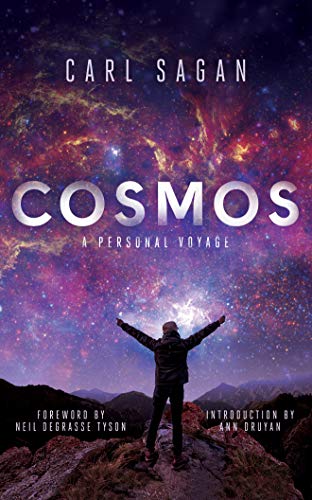
Cosmos by Carl Sagan describes fifteen billion years of cosmic evolution transforming matter into life and consciousness, enabling the Cosmos to wonder about itself.


Book links are Bookshop.org affiliate links. Curiate may earn a commission on purchases, at no extra cost to you — Bookshop.org also gives a share to independent bookshops.
Reading paths, built to arrive somewhere
Curiate turns what you are curious about into a short path — a quick lesson on an article, something to watch, and a book to go deep on. Free to browse.