Italian immigrants in New York and becoming Italian American
The experience of Italian immigrants in New York concerns Italian Americans, who are concentrated in the urban Northeast. How did regional newcomers come to be seen as part of American life? By the end, readers will understand how migration, labor, prejudice, and shared identity shaped that transition.
2 articles, 1 book
The reading path
- Readthe experience of italian immigrants in new york · Wikipedia
From 1880 to 1914, 13 million Italians migrated out of Italy, most from southern Italy and Sicily, and 4 million arrived in the United States. Immigrants without industrial skills found low-wage manual labor jobs, and Italian men in the Little Italys often did manual labor and public works; around 90 percent of New York City's public works employees were estimated to be Italians as early as 1890. In 1891, eleven Italian immigrants in New Orleans were lynched over their alleged role in the murder of police chief David Hennessy, after nine were tried and acquitted. The case illustrates the impact of negative stereotypes about Italian immigrants, whose neighborhoods were often depicted as violent and controlled by criminal networks.
- ReadThe Italian-American Immigration Experience - JSTOR Daily · JSTOR Daily
In 1982, 56 percent of survey respondents said Italian immigrants had been a net positive for the country, compared with 10 percent who said the opposite. Writing in the journal MELUS in 2004, historian Stefano Luconi describes early 20th Century Italian-Americans: newcomers generally identified with regional cultures and dialects, and discrimination pushed them to develop a shared Italian identity; despite ties to a wartime enemy, Italian Americans were viewed as thoroughly American.
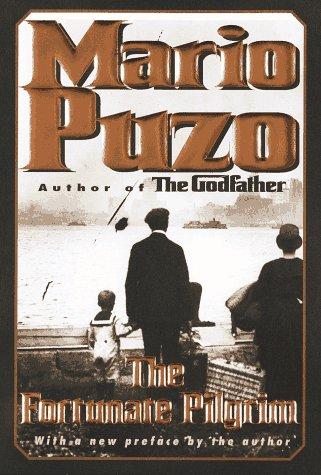
- BookThe Fortunate Pilgrim · Bookshop.org
The Fortunate Pilgrim by Mario Puzo describes Lucia Santa, fresh from the farms in Italy, struggling to hold her family together in a strange land, and one New York City immigrant family's loves, crimes and struggles in Hell's Kitchen. Its family-level account gives readers a way to consider immigrant life through one family's experience.


Book links are Bookshop.org affiliate links. Curiate may earn a commission on purchases, at no extra cost to you — Bookshop.org also gives a share to independent bookshops.
Reading paths, built to arrive somewhere
Curiate turns what you are curious about into a short path — a quick lesson on an article, something to watch, and a book to go deep on. Free to browse.