How extreme sports meet risk and nature
Extreme sports are activities perceived as involving a high risk of injury or death, often involving speed, height, intense physical exertion, and specialized gear. The lessons answer how risk and nature shape these activities, and what high-altitude climbing demands of participants. Together, they build an understanding of the relationship between human challenge and the natural conditions of extreme sport.
2 articles, 1 book
The reading path
- Readextreme sports · Wikipedia · 11 min read
Activities categorized by media as extreme sports differ from traditional sports due to the higher number of inherently uncontrollable variables, frequently weather and terrain-related, including wind, snow, water and mountains. These natural phenomena cannot be controlled and inevitably affect the outcome of the given activity or event. The Dangerous Sports Club of Oxford University, England, founded by David Kirke, Chris Baker, Ed Hulton and Alan Weston, invented modern day bungee jumping and made the first modern jumps on 1 April 1979, from the Clifton Suspension Bridge, Bristol, England. Extreme sports often carry the potential risk of serious and permanent physical injury and even death. They also have the potential to produce drastic benefits on mental and physical health and provide opportunity for individuals to engage fully with life.
- ReadPsychological traits of extreme sport participants: a scoping review - PMC · pmc.ncbi.nlm.nih.gov
High-altitude climbing, an extreme sport, takes participants above 8000 m, exposing them to adverse physiological and psychological conditions.
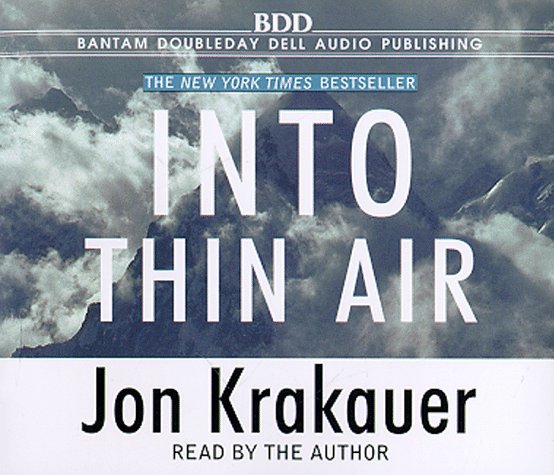
- BookInto Thin Air · Bookshop.org
Into Thin Air by Jon Krakauer recounts his eyewitness experience reaching Mt. Everest's summit after fifty-seven hours without sleep and under the effects of oxygen depletion, while also examining the myth of the world's tallest mountain.

Book links are Bookshop.org affiliate links. Curiate may earn a commission on purchases, at no extra cost to you — Bookshop.org also gives a share to independent bookshops.
Reading paths, built to arrive somewhere
Curiate turns what you are curious about into a short path — a quick lesson on an article, something to watch, and a book to go deep on. Free to browse.