How sports sociology connects sport to community values
Sports sociology studies sport as a social phenomenon, including the groups and structures involved and its economic, financial, and social impacts on players and society. These lessons answer how sport relates to community and social values, helping readers understand its place in shared life. They consider how sport connects communities, social roles, and competing values.
2 articles, 1 book · about 33 min of reading and viewing
The reading path
- Readsports sociology · Wikipedia · 26 min read
Sports sociology's functionalist account links sport to community solidarity: sport developed from religious ceremonies that promoted social and moral solidarity. Bromberger saw similarities between religious ceremonies and football matches, which are held in particular spatial configurations, with sacred pitches that may not be polluted by pitch invaders, and intense emotional states among fans. In team sports, white players are often placed in central positions demanding intelligence, decisiveness, leadership, calmness and reliability, while black players are placed in positions demanding athletic ability, physical strength, speed and explosiveness. For example, white players may be central midfielders and black players wingers. Hegemony is the power relations and methods dominant groups use to gain ideological consent without physical coercion. The history of sport shows that colonized people are not necessarily manipulated through sport, while sport professionalization and their own popular culture helped the working class avoid mass subordination to bourgeois values; hegemony is always open to contestation, and counter-hegemonic movements may emerge.
- Read"Not Just a Game: Sport and Society in the United States" · inquiriesjournal.com · 7 min read
Sports sociology examines how sport coincides with community values and political agencies, as it attempts to define the morals and ethics attributed to athletes and society as a whole. Sport also enhances individuals' physical and mental well-being and integrates social classes, augmenting communal principles.
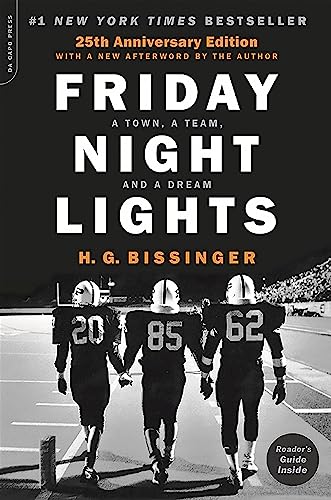
- BookFriday Night Lights: A Town, a Team, and a Dream · Bookshop.org
Friday Night Lights: A Town, a Team, and a Dream is a 1990 non-fiction book of immersive journalism written by H. G. Bissinger, following the story of the 1988 Permian High School Panthers football team from Odessa, Texas, as they made a run towards the Texas state championship.

Book links are Bookshop.org affiliate links. Curiate may earn a commission on purchases, at no extra cost to you — Bookshop.org also gives a share to independent bookshops.
Reading paths, built to arrive somewhere
Curiate turns what you are curious about into a short path — a quick lesson on an article, something to watch, and a book to go deep on. Free to browse.