How football reflects society through sports and politics
Sports and politics, also called sports diplomacy, is the use of sport to influence diplomatic, social, and political relations, with positive and negative implications over history. What can football reveal about the ways sport and society shape one another? The lessons consider how football reflects social divisions, collective action, public opinion, and political power.
2 articles, 1 video, 1 book
The reading path
- Readsports and politics · Wikipedia · 45 min read
The Old Firm rivalry between the Scottish clubs Celtic and Rangers from Glasgow had roots in more than just sport and was infused with complex disputes, sometimes centered on religion, Northern Ireland-related politics, national identity, and social ideology. Cricket has played a role in sporting diplomacy: India and Pakistan revived cricket tours in 2004 after a fifteen-year lull in test matches, following diplomatic initiatives to bury half a century of mutual hostility. A study of NCAA football games from 1946 to 2008 found that a home-team win the game before an election could raise the incumbent's vote share by 1.5 percent, and a loss had the opposite effect. The study concluded that wins made voters feel better about society.
- ReadThe Geopolitics of the World Cup · Foreign Policy
MK says that if a strongman dictator celebrates national pride, patriotism, or something special about their country, football can whip up tribal feelings. MK says national leaders and heads of state and government attend World Cup crowds to ride off the coattails of their national team's success.
- WatchSports and politics: How strong is group identity? | Ezra Klein | Big Think · YouTube · 5 min watch
Ezra Klein argues that identity influences everyone's politics. Social psychology experiments show that people tend to favor their own groups, and that group identity can trump all else in politics and policy decisions.
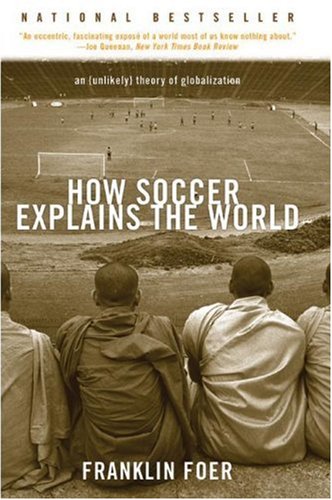
- BookHow Soccer Explains the World: An Unlikely Theory of Globalization · Bookshop.org
How Soccer Explains the World by Franklin Foer analyzes the interchange between soccer and the new global economy, treating soccer as a globalized medium for explaining globalization's effects on society as a whole.


Book links are Bookshop.org affiliate links. Curiate may earn a commission on purchases, at no extra cost to you — Bookshop.org also gives a share to independent bookshops.
Reading paths, built to arrive somewhere
Curiate turns what you are curious about into a short path — a quick lesson on an article, something to watch, and a book to go deep on. Free to browse.