How globalization shapes identity and conflict
Globalization is the process of growing interdependence and integration among countries' economies, markets, societies, and cultures. The lessons answer how global ties shape national identity and conflict, and help readers understand the tensions between international connection and national politics. They trace these themes through economic, cultural, and political dimensions.
3 articles, 1 video, 1 book · about 1 hr 49 min of reading and viewing
The reading path
- Readglobalization · Wikipedia · 60+ min read
Globalization's triangular trade let Europe take advantage of resources within the Western Hemisphere. The transfer of animal stocks, plant crops, and epidemic diseases associated with Alfred W. Crosby's concept of the Columbian exchange also played a central role in this process. Karl Marx, writing in 1848 about globalization, noticed that capitalism increased national interdependence and predicted a universal modern world society. He said that local and national self-sufficiency had given way to "universal inter-dependence of nations." The anti-globalization movement protested the World Trade Organization's Third Ministerial Meeting in the Battle of Seattle in 1999. Within the Seattle demonstrations, protesters used both creative and violent tactics to draw attention to globalization.
- ReadEchoes of the Gilded Age. Part 2: Politics · Klement on Investing · 7 min read
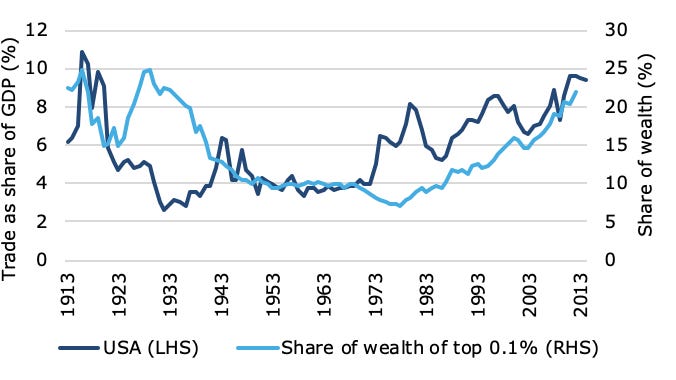
In the worst case, the author says, nationalist competition between populist leaders all over the world could lead to an accidental war, similar to the First World War. The major European economies were in intense economic and political competition and bound by treaties, which led to war after the Austrian crown prince was assassinated in Sarajevo in 1914.
- Read"Weighing the Pros and Cons of Globalization" · wilsoncenter.org · 5 min read
Globalization faces renewed risks: terrorism has made national borders more important, raised the costs of international trade and increased the risks of international investment.
- WatchGlobalization II - Good or Bad?: Crash Course World History #42 · YouTube · 14 min watch
John asks whether globalization is a net positive, weighing wealth creation, poverty reduction, innovation and relative peace against wealth disparity, environmental damage and the spread of disease, and shows why its overall impact is hard to judge.
- BookThe Reluctant Fundamentalist · Bookshop.org
The Reluctant Fundamentalist by Mohsin Hamid tells of Changez's love affair with an American woman and his eventual abandonment of America, as he recounts them to a nervous American stranger during a single evening in an outdoor Lahore cafe.



Book links are Bookshop.org affiliate links. Curiate may earn a commission on purchases, at no extra cost to you — Bookshop.org also gives a share to independent bookshops.
Reading paths, built to arrive somewhere
Curiate turns what you are curious about into a short path — a quick lesson on an article, something to watch, and a book to go deep on. Free to browse.