How map-making shapes our view of reality
Cartography is the study and practice of making and using maps, combining science, aesthetics and technique to model reality or imagined reality and communicate spatial information effectively. These lessons answer how maps shape our view of reality and help you understand how choices in map-making influence what maps communicate. They consider how maps balance representation, distortion and perspective.
2 articles, 1 book · about 40 min of reading and viewing
The reading path
- Readthe art of map-making · Wikipedia · 31 min read
In map-making, Beck's London Underground map is an iconic example of a topological map. Although the most widely used map of "The Tube," it varies scale constantly and abruptly, straightens curved tracks, contorts directions, and preserves the River Thames and the topology of station order and interchanges between train lines. Babylonian map-making produced the oldest surviving world maps, from 9th century BCE Babylonia. One shows Babylon on the Euphrates, surrounded by Assyria, Urartu and several cities, all, in turn, surrounded by a "bitter river" (Oceanus). The Arab geographer Muhammad al-Idrisi produced his medieval atlas Tabula Rogeriana (Book of Roger) in 1154. His world map remained the most accurate world map for the next three centuries.
- ReadIs North America Really Bigger Than Africa As It Appers On The World Map? · ScienceABC · 9 min read
All maps are a lie, but they all lie about different parameters. The things chosen to be distorted in a map provide clear insight into human behavior.
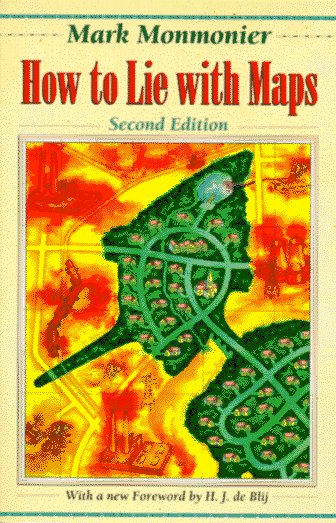
- BookHow to Lie with Maps · Bookshop.org
How to Lie with Maps by Mark Monmonier surveys how symbols and color can mislead viewers, including on choropleth maps, and highlights critical thinking when interpreting maps.


Book links are Bookshop.org affiliate links. Curiate may earn a commission on purchases, at no extra cost to you — Bookshop.org also gives a share to independent bookshops.
Reading paths, built to arrive somewhere
Curiate turns what you are curious about into a short path — a quick lesson on an article, something to watch, and a book to go deep on. Free to browse.