How photographs shape public understanding
Photojournalism is journalism that uses images to tell a news story, with a rigid ethical framework requiring an honest and impartial approach. These lessons answer how photographs shape public understanding and help readers understand their influence on how people see events and society. They trace this role across news, war, social documentary, racial injustice, and images made under constraint.
2 articles, 1 book · about 27 min of reading and viewing
The reading path
- Readphotojournalism · Wikipedia · 25 min read
The "Golden Age of Photojournalism" is often considered to be roughly the 1930s through the 1950s. Compact commercial 35mm Leica Camera in 1925 and the first flash bulbs between 1927 and 1930 allowed the journalist true flexibility in taking pictures. In the 21st century, digital cameras and mobile phones became central tools of photojournalism, changing how news images were gathered and distributed. Social media let the Associated Press and other companies reach citizen journalists who own photos of major events and obtain permission to use them in news outlets. John Thomson, a pioneer of photojournalism, began publishing Street Life in London with radical journalist Adolphe Smith from 1876 to 1877. Their project documented London street people in photographs and text, establishing social documentary photography as photojournalism; Thomson made printed photographs the predominant medium for imparting information, combining them with the printed word.
- ReadHow Photojournalist Margaret Bourke-White Showed Apartheid to Americans - JSTOR Daily · JSTOR Daily · 2 min read
"South Africa and Its Problem," published in September of 1950, condemned racial injustice, both verbally and visually. John Edwin Mason, who analyzes Bourke-White's essays and their impact, argues that two of her featured photo-essays "were most Americans' visual introduction to apartheid," and that avoiding any mention or depiction of black activism undermined the analysis of "South Africa and Its Problem."
- BookThe Ongoing Moment · Bookshop.org
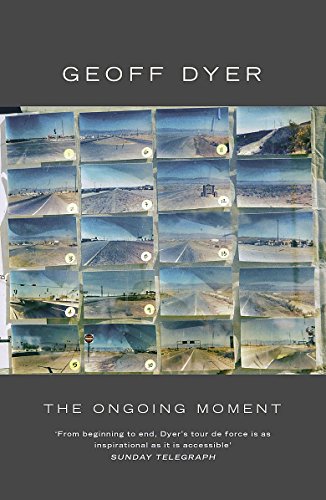
The Ongoing Moment by Geoff Dyer looks at how canonical photographers photographed recurring subjects, including barber shops, benches, hands, roads, and signs, and constructs a narrative in which the photographers encounter one another.


Book links are Bookshop.org affiliate links. Curiate may earn a commission on purchases, at no extra cost to you — Bookshop.org also gives a share to independent bookshops.
Reading paths, built to arrive somewhere
Curiate turns what you are curious about into a short path — a quick lesson on an article, something to watch, and a book to go deep on. Free to browse.