How photography became accessible to everyone
The history of photography is how people learned to make images using light, beginning with camera obscura projection and light-sensitive substances, including Johann Heinrich Schulze's image capture around 1718. How did photography become accessible to everyone, and what can its changing methods help us understand? The lessons trace how photography's tools and practices have widened access over time.
2 articles, 1 video, 1 book · about 42 min of reading and viewing
The reading path
- ReadThe history of photography from its invention to the present · Wikipedia · 32 min read
The physiognotrace was an instrument used to create a semi-automated portrait. Invented in the 18th century, it was abandoned when light-sensitive materials were discovered. The active pixel sensor (APS) has increasingly replaced the CCD in photography and is commonly used in cell phone cameras. Used by billions of people worldwide, these mobile phone cameras have dramatically increased photographic activity and material and fueled citizen journalism. The Autochrome plate became the first widely used method of color photography when inventors and brothers Auguste and Louis Lumière commercially introduced it in 1907. Based on one of Louis Duclos du Haroun's ideas, it took one photograph through a mosaic of tiny color filters overlaid on the emulsion, rather than three separate photographs through color filters.
- ReadTake a Look at the 'Extraordinary' 19th-Century Portraits Made With Some of the Earliest Methods of Photography · Smithsonian Science · 4 min read
In photography's history, tintypes were much cheaper to make and easier to transport than daguerreotypes. Photographer Zhao said, "A tintype can be made basically by a guy in a tent on the side of the road."
- WatchThe first faked photograph · YouTube · 6 min watch
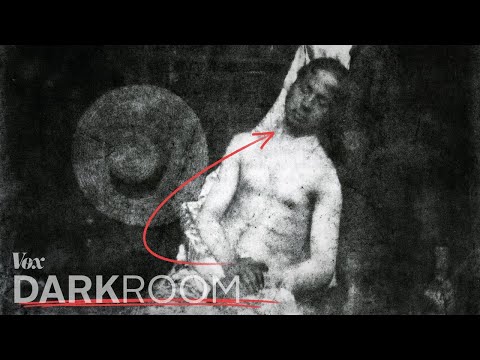
The video covers Hippolyte Bayard's early photographic work and his staged self-portrait protesting that his achievement was overlooked.
- BookA World History of Photography · Bookshop.org
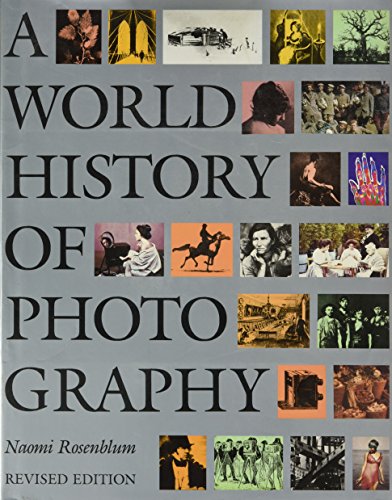
A World History of Photography by Naomi Rosenblum traces the medium chronologically and thematically, from the camera lucida to the latest computer technology and across Europe, the Americas, and the Far East. Rosenblum investigates photography's aesthetic, documentary, commercial, and technical aspects in historical context.


Book links are Bookshop.org affiliate links. Curiate may earn a commission on purchases, at no extra cost to you — Bookshop.org also gives a share to independent bookshops.
Reading paths, built to arrive somewhere
Curiate turns what you are curious about into a short path — a quick lesson on an article, something to watch, and a book to go deep on. Free to browse.