How religion shapes collective life
The anthropology of religion studies religion in relation to other social institutions and compares religious beliefs and practices across cultures. These lessons answer how religion can act as a social force, helping you understand its role in shaping collective life. They consider how religious practices and responsibilities connect people and society.
2 articles, 1 video, 1 book · about 38 min of reading and viewing
The reading path
- Readthe anthropology of religion · Wikipedia · 14 min read
Totem is an object that may be an animal or a wooden cross. Durkheim (1858-1917) viewed religion as a collective societal force, with religious forces embodied in the totem. A major problem in the anthropology of religion is defining religion itself. Anthony F. C. Wallace proposes four synthetic categories, each subsequent category subsuming the previous, though they do not necessarily encompass all religions.
- ReadReligion in the Ancient World: Order and the Spiritual Experience · World History Encyclopedia · 23 min read
Mesopotamian city dwellers were responsible for providing the gods with what they needed to run the world, as co-workers in holding back chaos. The claim of some historians that Mesopotamians were slaves to their gods is untenable, because people understood their position as co-workers.
- WatchAndrew Cohen on the Danger of Organized Religion | Big Think · YouTube · 1 min watch
Maria Konnikova says humans have a deep desire for meaning and are curious about cause and effect, sometimes dropping objects as infants to learn that they fall. The video, titled "Andrew Cohen on the Danger of Organized Religion," also asks, "What is the difference between a cult and a religion? Perhaps not much."
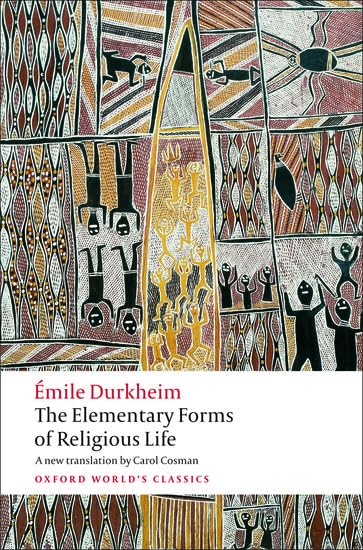
- BookThe Elementary Forms of Religious Life · Bookshop.org
The Elementary Forms of Religious Life, by French sociologist Émile Durkheim, analyzes religion as a social phenomenon. In his study of totemic societies in Australia, he concluded that the animal or plant each clan worshipped as a sacred power was, in fact, the society itself.

Book links are Bookshop.org affiliate links. Curiate may earn a commission on purchases, at no extra cost to you — Bookshop.org also gives a share to independent bookshops.
Reading paths, built to arrive somewhere
Curiate turns what you are curious about into a short path — a quick lesson on an article, something to watch, and a book to go deep on. Free to browse.