How stoicism reasons toward a virtuous life
Stoicism is a philosophical movement and practical guide to living that emphasizes daily self-discipline and moral improvement. How can reasoning guide a person toward a virtuous life? The lessons consider how reason shapes ethical conduct, emotional responses, and the pursuit of a well-lived life.
2 articles, 1 book · about 45 min of reading and viewing
The reading path
- Readstoicism · Wikipedia · 32 min read
The Stoics believed that practicing virtue, a will in agreement with Nature, is enough to achieve eudaimonia: a well-lived life. Many Stoics, such as Seneca and Epictetus, emphasized that because "virtue is sufficient for happiness", a sage would be emotionally resilient to misfortune. In Stoic epistemology, the sage can attain certainty and true knowledge (episteme) only by verifying conviction with the expertise of peers and the collective judgment of humankind. The Stoics connect these ideals to virtue and the goal of "living a well-reasoned life". For the Stoic Chrysippus, passions are evaluative judgments. The Stoics held that reason could overcome destructive emotions.
- Read"Stoic Ethics" · iep.utm.edu · 13 min read
Stoic ethics holds that virtue is the only real good and, unlike in Aristotle's view, is sufficient for happiness without depending on luck. The virtuous life is free of passions, which are intrinsically disturbing and harmful to the soul, but includes appropriate emotive responses and fulfilling personal, social, professional, and civic responsibilities. In Stoic ethics, reason is the distinct and uniquely human capacity. For human beings, "living in agreement with nature" means living in agreement with this special, innate endowment, the ability to reason.
- BookMeditations · Bookshop.org
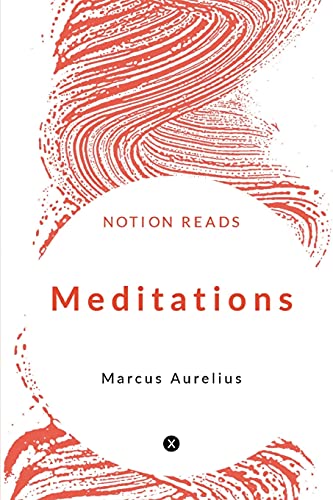
Meditations by Marcus Aurelius records his private reflections on Stoic philosophy; in its themes, he counsels readers to control their emotions, avoid panic over bad news, and correct their own behavioral errors.

Book links are Bookshop.org affiliate links. Curiate may earn a commission on purchases, at no extra cost to you — Bookshop.org also gives a share to independent bookshops.
Reading paths, built to arrive somewhere
Curiate turns what you are curious about into a short path — a quick lesson on an article, something to watch, and a book to go deep on. Free to browse.