How taxation principles shape tax burdens
Taxation principles concern mandatory charges governments impose to fund public spending or regulate economic activity, transferring wealth from households and businesses to government. The lessons answer how taxes are collected, who ultimately bears their costs, and how tax design affects people's ability to pay. They connect tax burdens, economic effects, fairness, complexity, and practical constraints.
3 articles, 1 video, 1 book · about 1 hr 56 min of reading and viewing
The reading path
- Readtaxation principles · Wikipedia · 37 min read
Taxation principles distinguish who the law collects a tax from and who ultimately bears it: the marketplace determines the burden as taxes become embedded in production costs. Negative externalities is negative effects of a good that consumers do not feel. Taxing goods with these effects, called a Pigovian tax after economist Arthur Pigou, who wrote about it in his 1920 book "The Economics of Welfare", might increase economic efficiency while raising revenues and lower the overall tax burden for people who cause less societal harm. Lump-sum tax is a fixed amount that does not change with the taxed entity's circumstances. It is regressive because people with lower incomes must use a higher percentage of their income to pay it.
- ReadTax Simplification: Issues and Options | Brookings · Brookings · 60+ min read
Pigovian taxes might target greenhouse gases that cause climate change, polluting fuels such as petrol, water or air pollution, goods such as alcohol or tobacco that incur public healthcare costs, and excess demand for public goods such as traffic congestion. Arthur Pigou wrote about this type of tax in his 1920 book "The Economics of Welfare".
- ReadTaxation Without Money - JSTOR Daily · JSTOR Daily · 3 min read
Henry McCulloh, the Stamp Act's original drafter, criticized the Stamp Act of 1765, saying, "There is not Specie in most of the said Colonies" for many colonists to pay its duties in coin. Imposed as the Currency Act of 1764 deprived colonists of legal tender paper money, the tax burdened people who lacked a way to pay.
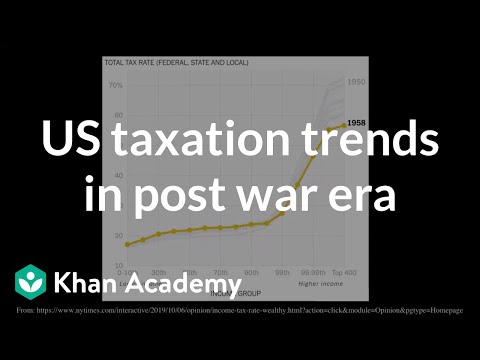
- WatchUS taxation trends in post war era | Macroeconomics | Khan Academy · YouTube · 4 min watch
US taxation trends from the postwar era show how the tax system has changed over time.
- BookCapital in the Twenty-First Century · Bookshop.org
Capital in the Twenty-First Century (French: Le Capital au XXIe siècle) is a book written by French economist Thomas Piketty. It focuses on wealth and income inequality in Europe and the United States since the 18th century.


Book links are Bookshop.org affiliate links. Curiate may earn a commission on purchases, at no extra cost to you — Bookshop.org also gives a share to independent bookshops.
Reading paths, built to arrive somewhere
Curiate turns what you are curious about into a short path — a quick lesson on an article, something to watch, and a book to go deep on. Free to browse.