How to build psychological resilience through skills
Psychological resilience is the ability to cope mentally and emotionally with a crisis or return quickly to how you were before it, and it can be cultivated over time or be a relatively stable trait. What learnable skills can help build resilience, and how can you understand and use them? The lessons connect personal skills, stress management, and supportive relationships to resilience.
2 articles, 1 video, 1 book · about 2 hr 3 min of reading and viewing
The reading path
- Readpsychological resilience · Wikipedia · 60+ min read
The Penn Resiliency Program (PRP) is a group cognitive-behavioral intervention that fosters aspects of psychological resilience. A meta-analysis of 17 PRP studies showed that the intervention significantly reduces depressive symptoms over time. Language learning with host communities encourages psychological resilience through social cohesion and networks. When refugees engage in these activities with host communities, engagement and communication increase. Military studies have found that resilience is also dependent on group support, with unit cohesion and morale the best predictor of combat resiliency within a unit or organization. Units with high cohesion tend to experience a lower rate of psychological breakdowns than units with low cohesion and morale.
- ReadBuilding Resilience · Greater Good Magazine · 3 min read
Linda Graham explains that human brains can become less able to access creative solutions and recovery plans if people are traumatized or under a constant state of anxiety. She offers tools to manage stress reactions and redirect them toward calmer states.
- WatchMental health and resilience - the secrets of inner strength | DW Documentary · YouTube · 52 min watch
Resilience is a lifelong learning process. A long-term study in Mainz, Germany, follows research into it, and Boris Cyrulnik's credo holds that social and political responsibility underpins stable psychological health.
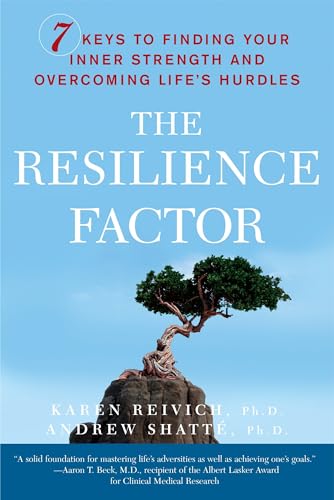
- BookThe Resilience Factor · Bookshop.org
The Resilience Factor describes practical strategies for developing resilience through stories and research.

Book links are Bookshop.org affiliate links. Curiate may earn a commission on purchases, at no extra cost to you — Bookshop.org also gives a share to independent bookshops.
Reading paths, built to arrive somewhere
Curiate turns what you are curious about into a short path — a quick lesson on an article, something to watch, and a book to go deep on. Free to browse.