How to build trust in remote team management
Remote team management concerns groups or teams that work together asynchronously or across organizational levels; Powell, Piccoli and Ives (2004) define virtual teams as "groups of geographically, organizationally and/or time dispersed workers brought together by information and telecommunication technologies to accomplish one or more organizational tasks."
2 articles, 1 book · about 1 hr 1 min of reading and viewing
The reading path
- Readremote team management · Wikipedia · 54 min read
In remote team management, members often meet face-to-face at the beginning of virtual teamwork. These kick-off workshops are expected to promote clarification of team processes, trust building, a shared interpretative context, and high identification with the team. For remote team management, Gibson (2020) proposes "Care in Connecting," which pairs caution about physical proximity with compassion that individuals and organizations provide and receive. It creates inclusion when diverse voices are heard and incorporated online.
- ReadManaging remote teams: How to build a healthy and productive culture · Sage Advice US · 7 min read
Remote managers can build trust by giving people ownership over their work, setting clear goals and deadlines, and avoiding micromanaging how people achieve them. For example, they can agree on deliverables with a remote marketer and hold regular check-ins to discuss progress and roadblocks.
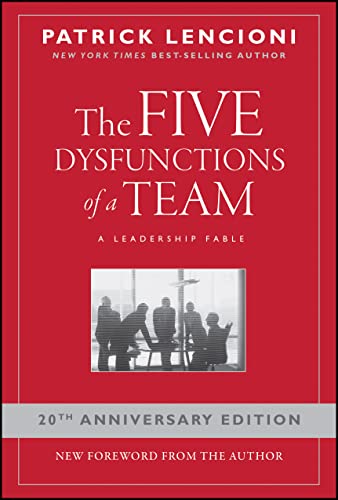
- BookThe Five Dysfunctions of a Team: A Leadership Fable · Bookshop.org
The Five Dysfunctions of a Team by Patrick Lencioni describes pitfalls teams face as they seek to grow together and examines causes of organizational politics and team failure.

Book links are Bookshop.org affiliate links. Curiate may earn a commission on purchases, at no extra cost to you — Bookshop.org also gives a share to independent bookshops.
Reading paths, built to arrive somewhere
Curiate turns what you are curious about into a short path — a quick lesson on an article, something to watch, and a book to go deep on. Free to browse.