How to choose business communication methods
Business communication is sharing information internally between employees or externally between businesses or with consumers to help a business achieve a fundamental goal. What is the right way to communicate in different business situations, and how can you choose it? The lessons consider how communication choices shape the clarity, direction, and effectiveness of business exchanges.
3 articles, 1 video, 1 book · about 23 min of reading and viewing
The reading path
- Readbusiness communication · Wikipedia · 9 min read
In business communication, electronic communication includes emails, text messages, voice and video calls, and employee intranet and HR software. Email is the most dominant genre of this communication in modern businesses. Upward business communication passes through the business hierarchy from the bottom upwards; a suggestion box lets low-level workers communicate with management anonymously. Business communication standards offer practical proposals for designing comprehensible reports and presentations, both conceptually and visually.
- ReadEmail lets other people schedule your life—here's how to stop it · Quartz · 4 min read
If an issue truly is urgent, employees should not be sending emails to one another. Email wasn't designed as a task-management application, yet many employees use email for precisely this purpose.
- ReadThe Need for More Effective Communication in the Investment Business - A Wealth of Common Sense · A Wealth of Common Sense · 3 min read
Clients need someone to tell them the truth in a way that makes sense and resonates with them. This piece argues the investment industry needs more people willing and able to communicate honestly and transparently.
- WatchGood Communication 101: Mirroring, Jargon, Hifalutin Words | Alan Alda | Big Think · YouTube · 7 min watch
Alan Alda discusses mirroring as a technique to enhance communication and explains that jargon can help people who share specialized language but confuse others. The video describes communication as more than conveying facts, saying language can also offer understanding.
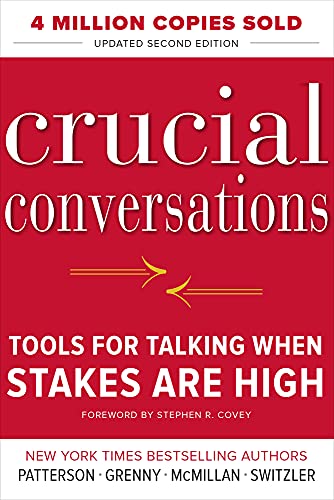
- BookCrucial Conversations: Tools for Talking When Stakes Are High · Bookshop.org
Crucial Conversations: Tools for Talking When Stakes Are High is a business self-help book written by the four co-founders of VitalSmarts: Kerry Patterson, Joseph Grenny, Ron McMillan, and Al Switzler. It was first published in 2002 by McGraw-Hill, with a second edition coming out in 2012 and a third in 2022.



Book links are Bookshop.org affiliate links. Curiate may earn a commission on purchases, at no extra cost to you — Bookshop.org also gives a share to independent bookshops.
Reading paths, built to arrive somewhere
Curiate turns what you are curious about into a short path — a quick lesson on an article, something to watch, and a book to go deep on. Free to browse.