Intellectual property rights across inventions and creative works
Intellectual property rights let creators or owners use their intellectual property and prevent others from doing so, with patents, copyrights, trademarks, and trade secrets among the best known types. What forms can these rights take, and how do they shape the sharing and use of ideas? The lessons consider legal protections, licensing, and the development of these rights across different contexts.
2 articles, 1 book
The reading path
- Readintellectual property rights · Wikipedia
A patent lets its owner exclude others from making, using, selling, offering to sell, and importing an invention for a limited period, in exchange for public disclosure. The invention must generally be novel, not obvious, and industrially applicable; disclosure enriches knowledge and stimulates innovation. Creative Commons licenses set conditions such as attribution, non-commercial use, share-alike distribution, and limits on derivative works. For databases, Open Data Commons licenses-including the Open Database License (ODbL), the Attribution License (ODC-By), and the Public Domain Dedication and License (PDDL), govern sharing, modification, and redistribution. Plant breeders' rights or plant variety rights are rights to commercially use a new variety of a plant. The variety must, amongst others, be novel and distinct, and evaluation of its propagating material for registration is considered.
- Read"Intellectual Property" · plato.stanford.edu
The Republic of Florence issued a statute on June 19, 1421, to Filippo Brunelleschi, a famous architect. The statute recognized authors' and inventors' rights and included an incentive mechanism; a 1474 statute of the Venetian Republic established compensation for infringement.
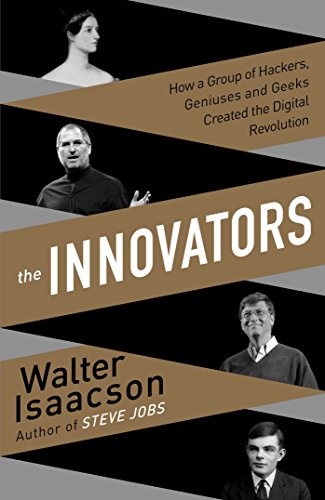
- BookThe Innovators: How a Group of Hackers, Geniuses, and Geeks Created the Digital Revolution · Bookshop.org
The Innovators by Walter Isaacson tells the story of digital-age pioneers, hackers, inventors, and entrepreneurs, describing how they collaborated and why working as teams made them more creative. Its account adds a human perspective on inventors for readers interested in intellectual property rights.

Book links are Bookshop.org affiliate links. Curiate may earn a commission on purchases, at no extra cost to you — Bookshop.org also gives a share to independent bookshops.
Reading paths, built to arrive somewhere
Curiate turns what you are curious about into a short path — a quick lesson on an article, something to watch, and a book to go deep on. Free to browse.