Islam's divisions and changing interpretations
Islam is an Abrahamic religion based on the Quran and the teachings of Muhammad. What shapes Islam's divisions and changing interpretations, and how can readers understand the ways these have developed? The lessons consider leadership, religious thought, authority and differing views of Islamic law.
3 articles, 1 book · about 2 hr 22 min of reading and viewing
The reading path
- Readislam · Wikipedia · 60+ min read
In Shariah, qiyas is used for legal questions not dealt with literally in the Qur'ān or Sunnah. The prohibition of wine is extended to alcohol because both share the mind-altering nature of alcoholic drinks as their operative cause. In Islam, Hasan al Basri held that although God knows people's actions, good and evil come from abuse of free will and the devil. Muʿtazila, a speculative school of thought influenced by Greek rationalist philosophy, advocated free will originated by Wasil ibn Ata. Quranism is an Islamic movement that holds Islamic law and guidance should be based only on the Quran, not the sunnah or Hadith; Quranists notably differ in their approach to the five pillars of Islam. From the 19th century onwards, thinkers including Syed Ahmad Khan, Abdullah Chakralawi and Ghulam Ahmed Perwez in India questioned the hadith tradition.
- Read"The World's Muslims: Religion, Politics and Society" · pewresearch.org · 27 min read
A survey of Muslims found that in some countries where Muslims make up more than 90% of the population, relatively few want their government to codify Islamic law: 27% in Tajikistan, 12% in Turkey and 8% in Azerbaijan. Support is often higher where constitutions or basic laws already favor Islam, including 99% in Afghanistan and 91% in Iraq.
- ReadAn Introduction to the Islamic World: 1,000 Years of History in 19 Minutes · Open Culture · 2 min read
The first four caliphs after Muhammad held power for thirty years, the period in which the first Muslim state emerged. After Muhammad's death in the year 632, a crisis of authority began, and supporters of Ali ibn Abi Talib and their detractors became known as the Shias and Sunnis, two sides of a schism.
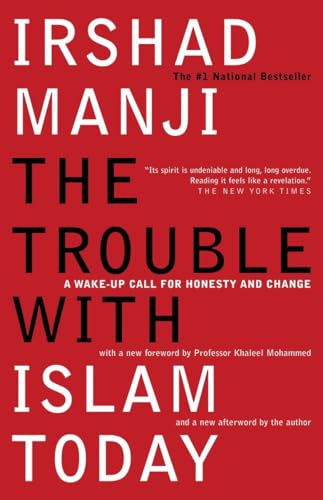
- BookThe Trouble with Islam Today: A Muslim's Call for Reform in Her Faith · Bookshop.org
The Trouble with Islam by Irshad Manji is a critical book about Islam, styled as an open letter to concerned citizens worldwide, Muslim or not.


Book links are Bookshop.org affiliate links. Curiate may earn a commission on purchases, at no extra cost to you — Bookshop.org also gives a share to independent bookshops.
Reading paths, built to arrive somewhere
Curiate turns what you are curious about into a short path — a quick lesson on an article, something to watch, and a book to go deep on. Free to browse.