Narrative transportation and attitude change
The psychology of audience engagement includes narrative transportation, a model in which readers become immersed in a story through focused attention, emotional engagement, mental imagery, and detachment from reality. Van Laer, de Ruyter, Visconti, and Wetzels describe this immersion as feeling as if one has entered the story's world, driven by empathy for characters and imagination of the plot.
2 articles, 1 video, 1 book · about 19 min of reading and viewing
The reading path
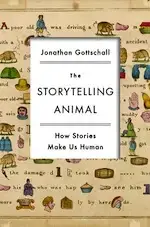
- ReadThe Storytelling Animal · Greater Good Magazine · 3 min read
Mirror neurons, brain cells that allow people to experience another person's emotions, also fire when people are at the movies, read books, or witness a story character emoting. People who read a lot of fiction tend to have higher empathy and better social skills, probably because of a strengthened mirror neuron response, Keith Oatley and other researchers have found.
- Readthe psychology of audience engagement · Wikipedia · 11 min read
Identification emphasizes involvement with story characters, while narrative transportation concerns involvement with the narrative as a whole, which can shape story receivers' beliefs, attitudes, and intentions. Elaboration Likelihood Model (ELM) is a model explaining why people accept or reject message claims, by careful analysis or superficial cues such as an expert's presence. In ELM, receivers process information logically, whereas in narrative transportation they process it emotionally, helping explain how stories persuade.
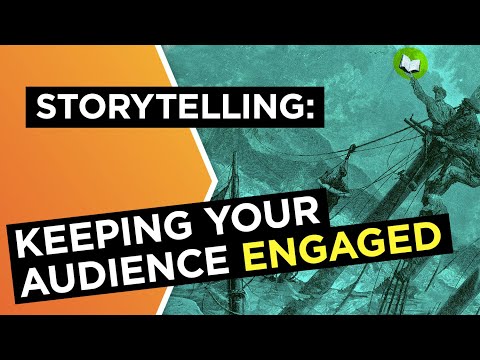
- WatchStorytelling: How to keep your audience engaged | Sebastian Junger | Big Think · YouTube · 5 min watch
Sebastian Junger says every piece of journalism has a narrative arc, which is integral to human storytelling. He describes a journalist as someone willing to disappoint themselves with the truth.
- BookMade to Stick: Why Some Ideas Survive and Others Die · Bookshop.org
Made to Stick by Chip Heath and Dan Heath describes the anatomy of ideas that stick and ways to make them stickier, including the human scale principle, the Velcro Theory of Memory, and curiosity gaps.

Book links are Bookshop.org affiliate links. Curiate may earn a commission on purchases, at no extra cost to you — Bookshop.org also gives a share to independent bookshops.
Reading paths, built to arrive somewhere
Curiate turns what you are curious about into a short path — a quick lesson on an article, something to watch, and a book to go deep on. Free to browse.