Political communication and group identity
Political communication is the practice or study of political messaging, such as in campaigns, speeches and advertising, often within mass media; it is an interdisciplinary subfield between communication studies and political science.
2 articles, 1 book
The reading path
- Readpolitical communication · Wikipedia
Political rhetoric can frame issues through conflict, political competition, personal stories, economic consequences, or moral justifications. Using strategies such as metaphors and narratives, it shapes how the public interprets events and policies, reinforcing some viewpoints while downplaying others. Barack Obama's presidential campaigns in 2008 and 2012 helped innovate the use of social media to engage voters and raise funds, mobilizing supporters; Volodymyr Zelenskyy's successful 2019 Presidential Campaign also featured heavy usage of social media posts. These campaigns show how online political communication can engage voters and mobilize supporters, shaping political group identity.
- ReadThe Linguistics of Mass Persuasion: How Politicians Make "Fetch" Happen (Part I) - JSTOR Daily · JSTOR Daily
Mass media repeatedly broadcasts politicians' words, teaching audiences how to receive a message; repeated phrases can be picked up with little pushback. Political terms such as "anchor babies" and "tax relief" can frame an issue positively or negatively, while nudging people toward an identity and a sense of which group to fear.
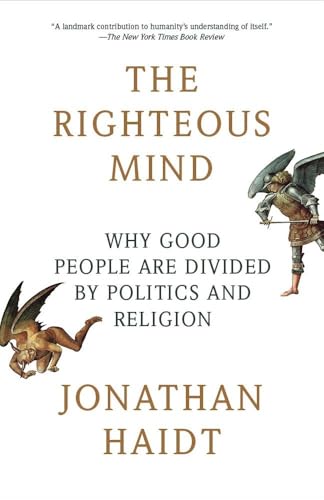
- BookThe Righteous Mind: Why Good People Are Divided by Politics and Religion · Bookshop.org
The Righteous Mind by Jonathan Haidt describes how beliefs are driven primarily by intuition, with reason often used to justify them, and presents moral foundations theory applied to the political beliefs of liberals, conservatives, and libertarians in the US.


Book links are Bookshop.org affiliate links. Curiate may earn a commission on purchases, at no extra cost to you — Bookshop.org also gives a share to independent bookshops.
Reading paths, built to arrive somewhere
Curiate turns what you are curious about into a short path — a quick lesson on an article, something to watch, and a book to go deep on. Free to browse.