Post-colonial politics and colonial rule's lasting effects
Post-colonial politics is the academic study of colonialism's cultural, political and economic consequences, including its effects on colonized people and their lands. The lessons answer how colonial rule continues to shape political choices and societies after formal independence. They trace this through themes of representation, identity, resistance and economic power.
3 articles, 1 book
The reading path
- Readpost-colonial politics · Wikipedia
Frantz Fanon, a psychiatrist working in a French hospital in Algeria, treated French soldiers and officers who carried out torture and Algerian torture victims. Fanon describes the revolutionary forces' 1956 decision to adopt French as a shared language, which could unite diverse resistance communities and cast doubt on the assumption that all French speakers in Algeria were loyal to the colonial government.
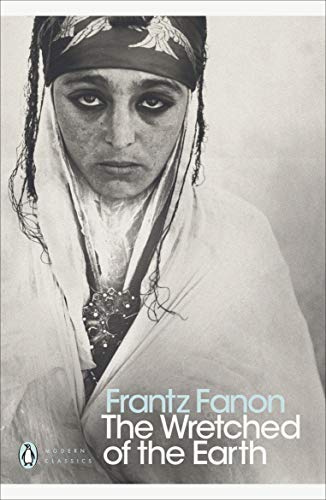
- BookThe Wretched of the Earth · Bookshop.org
Frantz Fanon, a psychiatrist and anti-colonial thinker, argued that Black people were constrained by white society's racial and sexual stereotypes, and that neuroses rooted in social alienation could not be treated by psychiatry because they reflected society's problems. Fanon also warned that colonial oppression could remain after formal independence, as a national bourgeoisie could govern in its own interests and those of multinational corporations rather than the people.
- ReadFrantz Fanon | Internet Encyclopedia of Philosophy · iep.utm.edu
Cultural critic Edward Said developed "orientalism" to describe how Western Europe divided the world into the "Occident" and the "Orient." Said argued that this framework served colonial imperialism by allowing European scholars to represent the Orient as inferior and preventing peoples of the Middle East, the Indian Subcontinent, and Asia from representing themselves as distinct peoples and cultures.
- ReadKey Thinker: Frantz Fanon - Rethinking Political Thinkers Resources - Oxford Learning Link · learninglink.oup.com
The Wretched of the Earth (French: Les Damnés de la Terre) is a 1961 book by the philosopher Frantz Fanon, in which the author provides a psychoanalysis of the dehumanising effects of colonisation upon individuals and nations, and discusses the broader social, cultural, and political implications of establishing a social movement for the decolonisation of a person and of a people.
Book links are Bookshop.org affiliate links. Curiate may earn a commission on purchases, at no extra cost to you — Bookshop.org also gives a share to independent bookshops.
Reading paths, built to arrive somewhere
Curiate turns what you are curious about into a short path — a quick lesson on an article, something to watch, and a book to go deep on. Free to browse.