Post-Soviet Russia's political upheaval and ordinary life
The political climate of post-Soviet Russia concerns politics within Russia's federal semi-presidential republic. How did political upheaval reshape government and public life? By the end, readers will understand how struggles over power and changes in governance affected the institutions and authorities shaping everyday life.
2 articles, 1 book
The reading path
- Readthe political climate of post-soviet russia · Wikipedia
Following the failed August coup of 1991, Yeltsin, the president of Russia, was in de facto control of much of a sometimes recalcitrant Soviet administrative apparatus. Gorbachev returned as Soviet president, but events began to bypass him. The February 1994 State Duma vote to grant amnesty to the leaders of the 1991 Moscow coup drew vehement denunciation from Yeltsin, Russia's president, though the vote was within the Duma's constitutional powers. Despite the 1993 constitution weakening parliament's standing against the presidency, legislators voted no confidence in the Government in June 1995 after a Chechen rebel raid in Budenovsk took more than 1,000 hostages, with dissatisfaction over Yeltsin's economic reforms also a factor. As central government power and influence became diluted, governors and mayors became the only relevant government authorities in many jurisdictions. This shift played out across a federal system that retained the Soviet pattern of regional jurisdictions: the 1993 constitution enumerated eighty-nine subnational jurisdictions, including twenty-one republics.
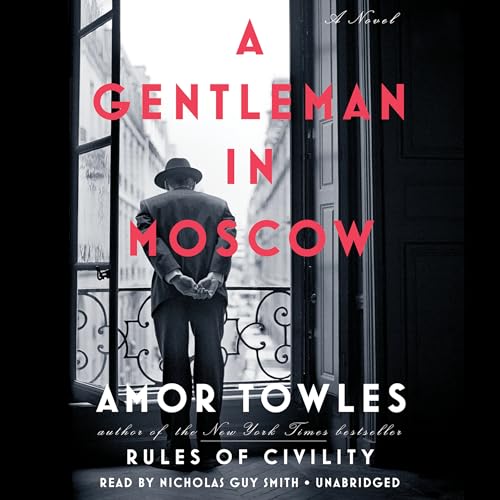
- BookA Gentleman in Moscow · Bookshop.org
In October 1993, Yeltsin's forces shelled the Russian White House, and a new constitution created a super-presidency whose powers Putin would exploit. The Clinton administration also publicly backed Yeltsin's reelection in 1996, overlooking his team's flagrant campaign violations; the reforms helped create oligarchs who became a pillar of Putin's rule.
- ReadWhy the Russian Democratic Transition Failed | Council on Foreign Relations · cfr.org
A Gentleman in Moscow by Amor Towles begins with the Count's arrest after the Bolshevik revolution of 1917 and his charge of "social parasitism," describing how the revolution shaped the treatment of someone returning from Paris.

Book links are Bookshop.org affiliate links. Curiate may earn a commission on purchases, at no extra cost to you — Bookshop.org also gives a share to independent bookshops.
Reading paths, built to arrive somewhere
Curiate turns what you are curious about into a short path — a quick lesson on an article, something to watch, and a book to go deep on. Free to browse.