The anthropology of religion and social life
The anthropology of religion studies religion in relation to other social institutions and compares religious beliefs and practices across cultures; as a field, it overlaps with but is distinct from Religious Studies. How can religion act as a social force? By the end, readers will understand how religious symbols, organization, rituals, and ways of ordering the world connect religion with social bonds and society.
3 articles, 1 book
The reading path
- Readthe anthropology of religion · Wikipedia
Émile Durkheim (1858-1917), a theorist of religion, argued that society gives a totem its power and meaning, and that it symbolizes the clan and the god. A totem might be an animal or a wooden cross, and individuals do not consciously recognize their reverence for it as reverence for society. Anthropologist Anthony F. C. Wallace proposes four synthetic categories of religion, each subsequent category subsuming the previous, though they do not necessarily encompass all religions. In communal religion, some religious societies arrange people by lineage or age group and assign roles based on knowledge; ecclesiastical religion is centrally organized and hierarchical, paralleling states, and typically deprecates competing individualistic and shamanistic cults.
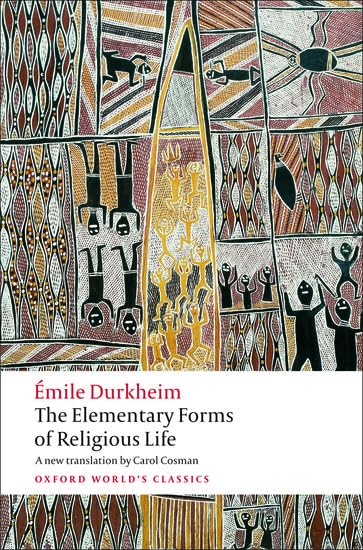
- BookThe Elementary Forms of Religious Life · Bookshop.org
During communal religious gatherings, collective effervescence describes heightened energy and unity that can transform ordinary objects into sacred symbols. Émile Durkheim, a sociologist, argued that religious rituals must be periodically repeated to renew social bonds; ReviseSociology cites a 2023 British Social Attitudes Survey finding that 80% of British adults take part in shared moral or cultural rituals, including Remembrance Sunday, charity events and football fandom.
- ReadDurkheim's Positive Definition of Religion: Bridging the Sacred and Profane • Sociology.Institute · Sociology Institute
In Aboriginal Australia, each clan had its own totem, and members had obligations including marrying outside the clan. Émile Durkheim, a sociologist, argued that totemism organized the natural world according to the tribe's social organization, suggesting that social categories shaped how people first made sense of the world, and showing how religion can shape society.
- ReadTotemism as the Foundation of Religion in Durkheim's Theory • Sociology.Institute · Sociology Institute
The Elementary Forms of Religious Life by Émile Durkheim analyzes religion as a social phenomenon. In his study of totemic societies, Durkheim, a French sociologist, concluded that the animal or plant worshipped by a clan as sacred power was in fact the society itself.

Book links are Bookshop.org affiliate links. Curiate may earn a commission on purchases, at no extra cost to you — Bookshop.org also gives a share to independent bookshops.
Reading paths, built to arrive somewhere
Curiate turns what you are curious about into a short path — a quick lesson on an article, something to watch, and a book to go deep on. Free to browse.