The Jack the Ripper murders and women's lives
The Jack the Ripper murders were killings attributed to an unidentified serial killer active in and around London's Whitechapel district in 1888, with five victims known as the canonical five. What can the women's lives and the attention surrounding the murders help us understand about women in Whitechapel's shadow? The lessons consider how poverty, vulnerability and public memory shaped the way these women were seen.
3 articles, 1 book
The reading path
- Readthe jack the ripper murders · Wikipedia
In October 1888, London's Metropolitan Police Service estimated that 1,200 women were working as prostitutes in Whitechapel, where endemic poverty drove many women to prostitution to survive. This poverty and deteriorating work and housing conditions formed part of the deprivation surrounding the Jack the Ripper murders. Emma Elizabeth Smith was attacked in Whitechapel on 3 April 1888 and died the following day at London Hospital. The large number of attacks against women in the East End adds uncertainty to how many victims were murdered by the same person; most authors attribute Smith's murder to general East End gang violence unrelated to the Ripper case, and she was not among the five, the "canonical five," widely believed to be the Ripper's work.
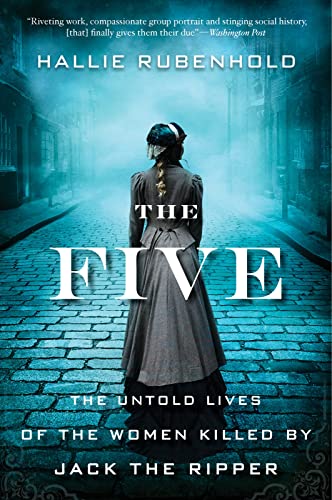
- BookThe Five: The Untold Lives of the Women Killed by Jack the Ripper · Bookshop.org
The East End was notorious for squalor, violence and crime, and the death or murder of a working girl was rarely reported in the press or discussed within polite society. Against that backdrop, the killings beginning in August 1888 stood out: Jack the Ripper mutilated and disemboweled women, and the crimes seemed to portray an abhorrence for the entire female gender.
- ReadJack the Ripper - Identity, Victims & Suspects | HISTORY · HISTORY
The police and newspapers received thousands of letters about the case, and this letter is one among hundreds. Some were attempts to help, but many were written by hoaxers claiming to be the murderer; this letter survives in Home Office records, and there is no strong evidence that any of these letters were written by the murderer. The victims were sidelined and often stereotyped as 'fallen' women of the 'unfortunate class' in Whitechapel in 1888.
- ReadHoax letter signed by 'Jack the Ripper' · The National Archives
The Five by Hallie Rubenhold examines the lives of the five women largely believed to have been killed by Jack the Ripper; Rubenhold claims only two were sex workers and that some may have been targeted because they were homeless.


Book links are Bookshop.org affiliate links. Curiate may earn a commission on purchases, at no extra cost to you — Bookshop.org also gives a share to independent bookshops.
Reading paths, built to arrive somewhere
Curiate turns what you are curious about into a short path — a quick lesson on an article, something to watch, and a book to go deep on. Free to browse.