The philosopher's stone was said to revive dead plants
The philosopher's stone was said to revive dead plants, make lamps burn perpetually, and turn common crystals into precious stones and diamonds. What other transformations and powers did alchemists attribute to it? The philosopher's stone is a mythic alchemical substance believed capable of turning base metals into gold or silver. In Harry Potter and the Sorcerer's Stone by J.K. Rowling, a three-headed dog guards the Stone, which grants its user immortality.
2 articles, 1 video, 1 book
The reading path
- ReadPhilosopher's stone · Wikipedia
The eighth-century Muslim alchemist Jabir ibn Hayyan, often romanised as Geber, reasoned that every metal combined four principles, two interior and two exterior. He theorized that rearranging a metal's basic qualities could transmute it into another. Prima materia is the name alchemists assign to the starting ingredient for the philosopher's stone. In the seventeenth century, Thomas Vaughan, an alchemist, wrote, "the first matter of the stone is the very same with the first matter of all things." The philosopher's stone was also said to revive dead plants, alongside other properties such as creating perpetually burning lamps and turning common crystals into precious stones and diamonds.
- ReadThe Philosopher's Stone: How Alchemy Led to Modern Chemistry | HISTORY · History.com
Alchemy's philosopher's stone was said to possess extraordinary powers: legend held that the mythical substance could change base metals into silver or gold and grant eternal life.
- WatchEarth: The Philosopher's Stone - Peter Wothers' 2012 Christmas Lectures 3/3 · The Royal Institution
In the third of his 2012 Royal Institution Christmas Lectures, Peter Wothers explains that alchemists thought metals literally grew in the rocks and dreamed of turning base metals into gold. Extracting minerals and metals from rocks has since made fortunes, but not quite in the way the alchemists imagined.
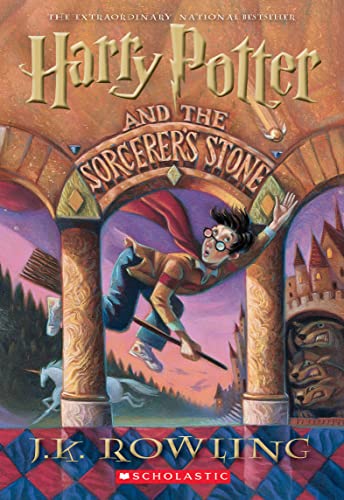
- BookHarry Potter and the Sorcerer's Stone · Bookshop.org
Harry Potter and the Sorcerer's Stone by J.K. Rowling follows Harry Potter, a young wizard who discovers his magical heritage on his eleventh birthday when he receives a letter of acceptance from Hogwarts School of Witchcraft and Wizardry. With Ron and Hermione, he learns that a three-headed dog guards the Philosopher's Stone, which grants its user immortality.


Book links are Bookshop.org affiliate links. Curiate may earn a commission on purchases, at no extra cost to you — Bookshop.org also gives a share to independent bookshops.
Reading paths, built to arrive somewhere
Curiate turns what you are curious about into a short path — a quick lesson on an article, something to watch, and a book to go deep on. Free to browse.