The printing press before Gutenberg and beyond Europe
The history of the printing press traces printing from early methods such as cylinder seals used by the Proto-Elamite and Sumerian civilizations in the 4th millennium BCE to woodblock printing for texts on paper, which originated in Tang China by the 7th century. Late medieval German inventor Johannes Gutenberg created the first printing press based on previously known mechanical presses and a process for mass-producing metal type.
2 articles, 1 book
The reading path
- ReadHistory of printing · Wikipedia
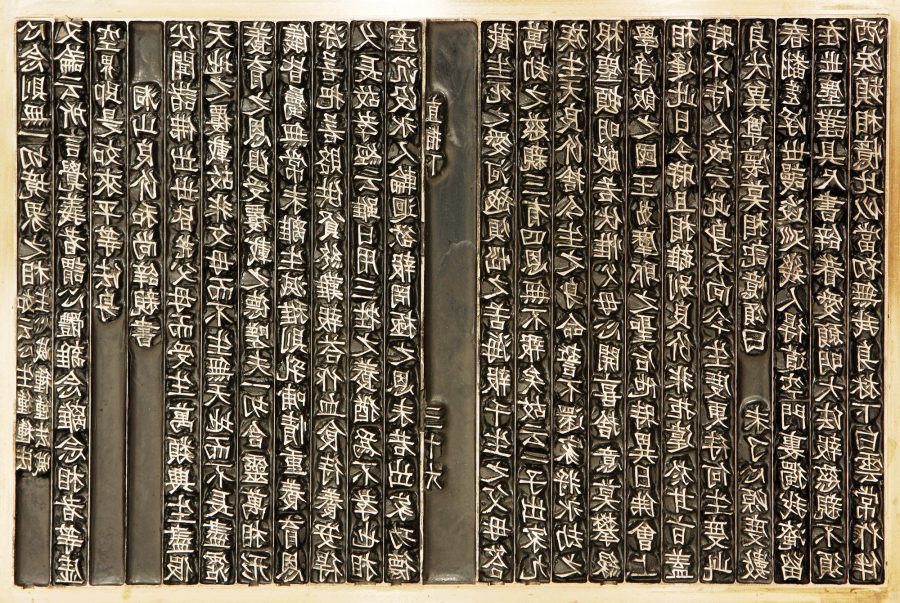
From 658 to 663, Xuanzang, a Chinese monk, printed one million copies of the image of Puxian Pusa for Buddhist devotees. Woodblock printing spread to Korea and Japan soon afterward; in Japan c. 770, Empress Shōtoku ordered one million copies of a dhāraṇī sutra, a Buddhist spell, each stored in a tiny wooden pagoda, together known as the Hyakumantō Darani. By the 12th century, wooden movable type had reached the Tangut Western Xia, where the 449-page Auspicious Tantra of All-Reaching Union is considered the earliest extant example of a text printed with it. Found in the ruins of the Baisigou Square Pagoda in the Helan Mountains, Ningxia, it is one of twelve Tangut titles printed in movable type that survive to this day.
- ReadThe Oldest Book Printed with Movable Type is Not The Gutenberg Bible: Jikji, a Collection of Korean Buddhist Teachings, Predated It By 78 Years and It's Now Digitized Online · Open Culture
Jikji, a collection of Korean Buddhist teachings printed in 1377, is the world's oldest extant book printed with movable type, though not the first book printed with it. In printing before Gutenberg and beyond Europe, the Goryeo dynasty commissioned printer Choe Yun-ui to reconstruct a woodblock print of the Tipitaka; by casting "individual characters in metal" and arranging them in a frame, he completed the project by 1250.
- BookThe Printing Revolution in Early Modern Europe
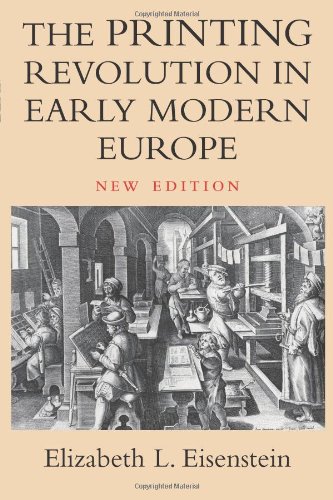
The Printing Revolution in Early Modern Europe is a book by Elizabeth L. Eisenstein.
Book links are Bookshop.org affiliate links. Curiate may earn a commission on purchases, at no extra cost to you — Bookshop.org also gives a share to independent bookshops.
Reading paths, built to arrive somewhere
Curiate turns what you are curious about into a short path — a quick lesson on an article, something to watch, and a book to go deep on. Free to browse.