Theater of the absurd, repetition, and stalled action
Theater of the absurd is a style of plays that focuses on life without meaning or purpose and on communication breaking down. The lessons answer how repetition, waiting, and stalled action shape this theater, and what they reveal about human existence. Together, they trace how circular patterns make inaction part of the form.
2 articles, 1 book
The reading path
- Readtheater of the absurd · Wikipedia
In theater of the absurd, plots rarely follow traditional structures; they can repeat clichés and routines or circle back on themselves. In Godot, characters perpetually wait for an absent man, while Endgame begins where it ended, with Clov saying, "Finished, it's finished, nearly finished, it must be nearly finished". Rosencrantz and Guildenstern are trapped in Hamlet, where the outcome has already been written, while many absurdist plays pair characters in interdependent relationships. Some Beckett scholars call such a pair a "pseudocouple"; Vladimir and Estragon may be roughly equal or begrudgingly interdependent, while Pozzo may dominate or torture the passive Lucky.
- ReadThe Theatre of the Absurd | British Literature Wiki · sites.udel.edu
In Waiting for Godot, both acts end with "Yes, let's go," followed by "They do not move"; the stage directions show the characters' movement often contradicting their words. This disconnect between words and actions links the play to the path's focus on the isolation of the individual.
- BookWaiting for Godot · Bookshop.org
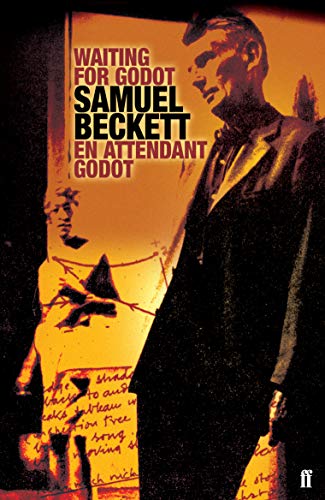
Waiting for Godot by Samuel Beckett follows Vladimir and Estragon, two seemingly homeless men waiting near a tree for someone or something named Godot. Beckett's comical wordplay, poetry, dreamscapes, and nonsense have been interpreted as mankind's inexhaustible search for meaning.

Book links are Bookshop.org affiliate links. Curiate may earn a commission on purchases, at no extra cost to you — Bookshop.org also gives a share to independent bookshops.
Reading paths, built to arrive somewhere
Curiate turns what you are curious about into a short path — a quick lesson on an article, something to watch, and a book to go deep on. Free to browse.