Toxicology and how poisons affect bodies
Toxicology is a scientific discipline that studies the adverse effects of chemical substances on living organisms and diagnoses and treats exposures to toxins and toxicants. How do dose, exposure, and forensic investigation help explain poisoning? By the end, readers will understand how toxic effects vary and how toxicology assesses their causes.
2 articles, 1 book
The reading path
- Readtoxicology · Wikipedia
A small exposure to some chemicals produces animals that "grow more rapidly, have better general appearance and coat quality, have fewer tumors, and live longer than the control animals." Toxic effects do not follow one pattern: most chemicals have a threshold below which no effect is observed, while a few have no well-defined safe exposure level, and chemicals that accumulate in the body receive special consideration. The 16th-century Swiss physician Paracelsus is considered "the father" of modern toxicology for his rigorous approach to understanding substances' effects on the body. Mathieu Orfila, a toxicologist, is also considered the modern father of toxicology and gave the subject its first formal treatment in 1813; Paracelsus's maxim, "The dose makes the poison," captures how dose shapes toxic effects.
- BookThe Poisoner's Handbook: Murder and Detection in the Victorian Era · Bookshop.org
In the 1840 murder trial of Marie Lafarge, doctors' tests disagreed about whether her husband, Charles Lafarge, had been poisoned. Forensic medicine professor Mathieu Orfila tested Charles Lafarge's body and the soil around the grave, found arsenic in the body, and showed it did not come from the soil.
- ReadVisible Proofs: Forensic Views of the Body · nlm.nih.gov
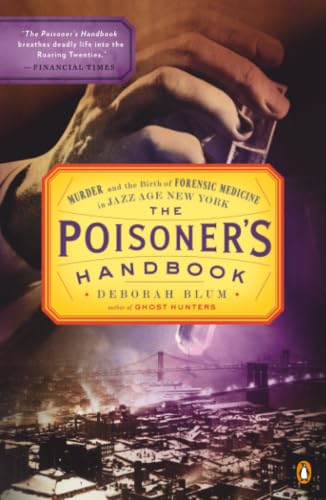
The Poisoner's Handbook by Deborah Blum describes how poison rocked Jazz Age New York City, where modern life created a "poison playground" and Prohibition sparked a chemist's war between bootleggers and government chemists.

Book links are Bookshop.org affiliate links. Curiate may earn a commission on purchases, at no extra cost to you — Bookshop.org also gives a share to independent bookshops.
Reading paths, built to arrive somewhere
Curiate turns what you are curious about into a short path — a quick lesson on an article, something to watch, and a book to go deep on. Free to browse.