Music and dance through rhythm and movement
Music and Dance was an Australian television program. How do rhythm and movement connect music, bodies, and minds? By the end, readers will understand how music and dance relate through bodily movement, shared timing, and their effects on coordination and well-being.
4 articles, 1 book
The reading path
- Readthe relationship between music and dance · Wikipedia
Latvian dancer Vija Vetra, who was living in Australia at the time, danced in each episode, accompanied by Robert Wilson on the piano. The series shows music and dance together through this pairing of piano accompaniment and Vetra's dancing.
- BookDance Dance Dance · Bookshop.org
Newborns are reported to perceive and anticipate a beat, and infants and toddlers spontaneously move to rhythm irrespective of their cultural background. The authors say rhythm perception depends on body movement, linking how rhythm moves bodies and minds, and propose that rhythm and dance co-evolved long before other musical attributes and (proto-)language, rather than being mere by-products of language.
- ReadFrontiers | "It Don't Mean a Thing if It Ain't Got that Swing"– an Alternative Concept for Understanding the Evolution of Dance and Music in Human Beings · Frontiers
Infants and toddlers spontaneously move to rhythm, and rhythm perception depends on body movement; the authors suggest that infants' susceptibility to being soothed by rocking may have prepared the impulse to dance. They propose that rhythm and dance may have co-evolved as linked parts of music, with dance also using visual and gestural signals and offering benefits including improved coordination and painkilling, anti-depressive, and anti-boredom effects.
- Read"It Don't Mean a Thing if It Ain't Got that Swing"– an Alternative Concept for Understanding the Evolution of Dance and Music in Human Beings - PMC · pmc.ncbi.nlm.nih.gov
EEG recordings showed that stronger neural entrainment-synchronised bursts of brain activity triggered by regular sensory input-was linked to better movement in time with a beat. People with stronger responses tapped a finger more accurately to both a regular rhythm and a syncopated one, suggesting that the brain's timing helps bodies coordinate with music.
- ReadMARCS | Professor Peter Keller: Rhythm on the brain, and why we can't stop dancing · westernsydney.edu.au
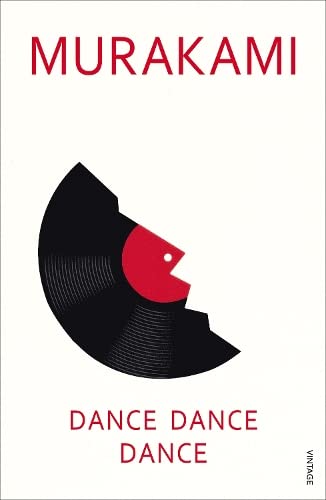
Dance Dance Dance by Haruki Murakami combines an offbeat cast of characters, including a psychic 13-year-old dropout with a passion for Talking Heads, with Murakami's idiosyncratic prose.

Book links are Bookshop.org affiliate links. Curiate may earn a commission on purchases, at no extra cost to you — Bookshop.org also gives a share to independent bookshops.
Reading paths, built to arrive somewhere
Curiate turns what you are curious about into a short path — a quick lesson on an article, something to watch, and a book to go deep on. Free to browse.