Who deserves moral standing in environmental ethics
Environmental ethics is practical philosophy about protecting nature and using natural resources sustainably. The field grew up in response to the works of Rachel Carson and Murray Bookchin and events such as the first Earth Day in 1970, when environmentalists urged philosophers to consider environmental problems. The lessons explore who deserves moral standing in nature, including non-human animals and ecosystems.
2 articles, 1 video, 1 book · about 1 hr 16 min of reading and viewing
The reading path
- Readenvironmental ethics · Wikipedia · 22 min read
In environmental ethics, Peter Singer's work falls under Marshall's 'libertarian extension'. Singer argued that the "expanding circle of moral worth" should include non-human animals' rights, and that excluding them would be speciesism. In environmental ethics, ecological extension argues that ecosystems and the global environment have intrinsic value as collective ecological entities. This category might include James Lovelock's Gaia hypothesis, the theory that Earth alters its geo-physiological structure over time to ensure equilibrium between evolving organic and inorganic matter. In environmental ethics, Marshall's 'conservation ethics' extends use-value into the non-human biological world. It focuses on the environment's utility or usefulness to humans.
- ReadEnvironmental Ethics · iep.utm.edu · 44 min read
Environmental ethicists have claimed that ethics must be extended beyond humanity, and some have claimed that this extension should include sentient animals, individual living organisms, or holistic entities such as rivers, species and ecosystems. Under these ethics, obligations arise because things are owed to the creatures or entities within the environment themselves.
- WatchScenario 5: Environmental Ethics & the Precautionary Principle · YouTube · 10 min watch
A philosophical argument for the precautionary principle is part of the environmental ethics covered in MIT 11.601, Introduction to Environmental Policy and Planning.
- BookThe Overstory · Bookshop.org
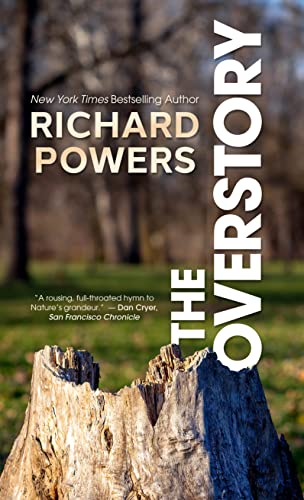
The Overstory is a novel by American author Richard Powers, published in 2018 by W. W. Norton & Company. The book follows nine Americans whose unique life experiences with trees bring them together to address the destruction of forests.
Book links are Bookshop.org affiliate links. Curiate may earn a commission on purchases, at no extra cost to you — Bookshop.org also gives a share to independent bookshops.
Reading paths, built to arrive somewhere
Curiate turns what you are curious about into a short path — a quick lesson on an article, something to watch, and a book to go deep on. Free to browse.