Why decisions depart from rational models in behavioral economics
Behavioral economics studies how psychological factors shape individual and institutional decisions, and how they depart from traditional economic theory's assumptions about rationality. These lessons answer why real decisions depart from rational models, helping readers understand how people make choices in practice. They trace this through the ways choices are framed, guided, and shaped by emotion and judgment.
2 articles, 1 book · about 50 min of reading and viewing
The reading path
- Readbehavioral economics · Wikipedia · 46 min read
In behavioral economics, prospect theory says decision makers avoid losses more than they seek equivalent gains, helping explain why real decisions depart from rational models. They compare outcomes with a reference level, classifying those above it as gains and those below it as losses. Framing effects lead people to choose differently depending on how options are presented. People tend to have little control over their susceptibility to the framing effect, since their choices are often based on intuition. In behavioral economics, satisficing sets a minimum requirement for a search and stops once it is met. The person may not find the option with the highest utility, but gets one that is "good enough."
- ReadThe Worst Part About Big Financial Decisions - A Wealth of Common Sense · A Wealth of Common Sense · 4 min read
Buying a home is driven by emotions nearly every step of the way, but most people look to their real estate agent for guidance. People get very few chances to perfect big financial decisions, which have by far the biggest impact on their finances.
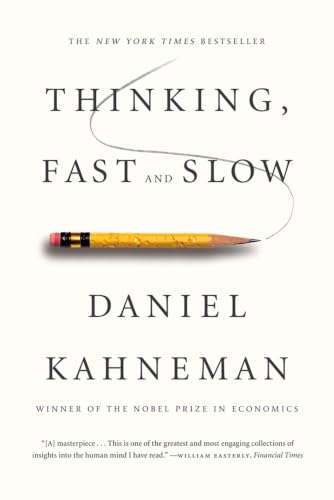
- BookThinking, Fast and Slow · Bookshop.org
Thinking, Fast and Slow by Daniel Kahneman distinguishes fast, instinctive and emotional thought from slower, more deliberative and logical thought. Kahneman argues that people have too much confidence in human judgment, including when they replace a difficult question with an easier one to answer.
Book links are Bookshop.org affiliate links. Curiate may earn a commission on purchases, at no extra cost to you — Bookshop.org also gives a share to independent bookshops.
Reading paths, built to arrive somewhere
Curiate turns what you are curious about into a short path — a quick lesson on an article, something to watch, and a book to go deep on. Free to browse.