Abstract expressionism and painting as an event
Abstract expressionism was a rebellious and idiosyncratic art movement that emerged in the United States in the aftermath of World War II and gained mainstream acceptance in the 1950s. How did painting become an event rather than simply an image? By the end, readers will understand how artistic context, process, gesture, and varied approaches shaped the movement's ideas about meaning and expression.
3 articles, 1 book
The reading path
- Readabstract expressionism · Wikipedia
In 1952, critic Harold Rosenberg called the canvas "an arena in which to act," shifting attention from the finished object to the struggle of making it. De Kooning repeatedly changed and painted out Woman I from June 1950 until January or February 1952, when he abandoned it unfinished; after art historian Meyer Schapiro encouraged him to persist, de Kooning began three other paintings on the same theme. Pollock's energetic "action paintings," de Kooning's figurative Women series, and Rothko's Color Field rectangles differed technically and aesthetically, yet all four artists are classified as abstract expressionists. Spontaneity or the impression of spontaneity characterized many of the abstract expressionists' works, although most of these paintings involved careful planning, especially since their large size demanded it. During the period leading up to and during World War II, modernist artists, writers, poets, collectors, and dealers fled Europe and the onslaught of the Nazis for safe haven in the United States, and many who did not flee perished. After the war, New York replaced Paris as the center of the art world, and a new generation of American artists began to emerge and dominate the world stage as abstract expressionists.
- Read"Abstract Expressionism – The Metropolitan Museum of Art" · metmuseum.org
Pollock's 1947 paintings, made by pouring and dripping thinned paint onto raw canvas laid on the ground, shocked many viewers through their scale and technique. Abstract Expressionists valued spontaneity and process; they saw a work's value in direct, immediate expression, with the gesture serving as evidence of its creation and the painting as a revelation of the artist's identity. Painting became an event enacted on the canvas, not just an image.
- Read"Abstract Expressionism: Redefining Art, Part One | Art History Unstuffed" · arthistoryunstuffed.com
Pollock dropped myth as subject matter and made the act of painting itself the content: for some artists, including Pollock, a work was a "duration," an act unfolding through thought and active making. His drip technique shifted content from an illustrated scene to an abstract kinetic process, while Abstract Expressionism redirected art from social to human consciousness, with meaning "to be Felt" rather than directly explained.
- Book
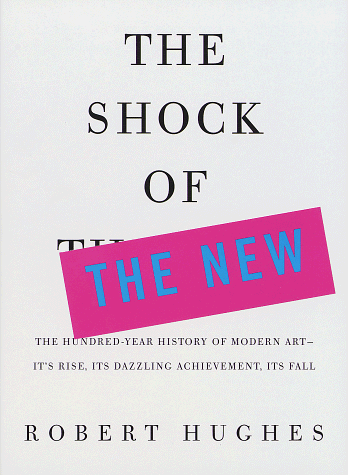
Book links are Bookshop.org affiliate links. Curiate may earn a commission on purchases, at no extra cost to you — Bookshop.org also gives a share to independent bookshops.
Reading paths, built to arrive somewhere
Curiate turns what you are curious about into a short path — a quick lesson on an article, something to watch, and a book to go deep on. Free to browse.