Cinematography techniques for framing and mood
Cinematography techniques are the art of motion picture and electronic video camera photography, used in science, business, entertainment, and mass communication. How do framing, lighting, and camera movement shape what viewers see and feel? By the end, you will understand how image composition and camera choices guide attention and create mood.
2 articles, 1 book
The reading path
- Readcinematography techniques · Wikipedia
In Citizen Kane (1941), cinematographer Gregg Toland and director Orson Welles used tighter apertures to keep foreground and background details in sharp focus-a practice known as deep focus. By keeping more of the scene clear, this technique shapes what viewers can see across the frame. Anamorphic is an optical process that squeezes an image horizontally, allowing twice the horizontal area to fit the same vertical size as standard lenses. Different aspect ratios provide different aesthetic effects: after the 1950s widescreen formats gave cinematographers a wider frame, the United States and the United Kingdom settled on 1.85 for theatrical projection, a cropped version of 1.37, while certain "epic" or adventure movies used anamorphic 2.39, often incorrectly denoted "2.40." The key light illuminates a subject from one side to create depth, while fill light softens its shadows and backlight separates it from the background with a halo effect. These lighting choices shape the scene's mood: low key lighting creates strong contrasts and deep shadows, commonly evoking suspense, mystery, or fear in film noir and horror.
- BookCinematography: Theory and Practice · Bookshop.org
Focal length is the distance between the point where light converges inside a lens and the image plane, the sensor or film negative. A pan moves the camera horizontally, a tilt angles it up or down, and a track moves it forward or backward relative to the subject; a zoom creates motion in the image by changing focal length even though the camera itself does not technically move.
- ReadCinematography terms you need to know · Videomaker
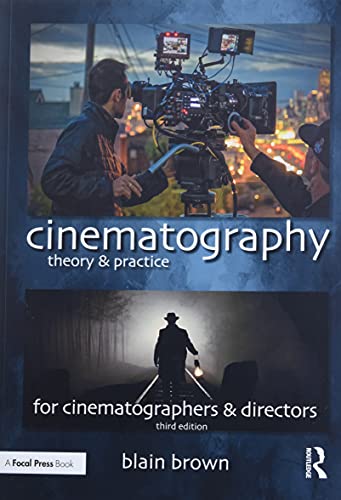
Cinematography by Blain Brown covers the artistry and craftsmanship of cinematography and visual storytelling, noting that some aspects of visual language, lighting and color are eternal while shooting methods, workflow and cameras have changed radically.


Book links are Bookshop.org affiliate links. Curiate may earn a commission on purchases, at no extra cost to you — Bookshop.org also gives a share to independent bookshops.
Reading paths, built to arrive somewhere
Curiate turns what you are curious about into a short path — a quick lesson on an article, something to watch, and a book to go deep on. Free to browse.