Civil rights and environmental injustice
The legacy of the civil rights movement on environmental activism reflects environmental injustices spanning millennia of unrecorded history. How have racial discrimination and public policy shaped environmental harms and access to outdoor spaces? By the end, readers will understand how race, class, political power, and civil-rights framing influence environmental decisions and unequal exposure to hazards.
2 articles, 1 book
The reading path
- ReadEnvironmental justice · Wikipedia
Warren County, the poorest county in the state with a per capita income of around $5,000 in 1980, meaning income per person, was chosen for a landfill site in the predominantly Black community of Afton. In 1982, residents protested for six-weeks, leading to over 500 arrests; the United Church of Christ's Commission for Racial Justice studied hazardous waste facility placement in the US and found that race was the most important factor predicting placement. Poor people and people of colour often work in the most dangerous jobs and live in the most polluted neighbourhoods, with their children exposed to environmental toxins at home and in playgrounds. This connects environmental decision-making to race, ethnicity, class, culture, lifestyles, and political power. Redlining involved denying loans and insurance to communities of color; alongside segregation, it led some communities to areas with high pollution and other environmental hazards. These policies also led to unequal access to outdoor spaces.
- BookThe Color of Law: A Forgotten History of How Our Government Segregated America · Bookshop.org
Black activists and civil-rights leaders who joined the movement in 1982 reframed the landfill decision as driven by racial consideration, using Warren County's demographics to support the claim that the landfill was an example of racially targeted harm. This civil-rights framing, presenting the landfill as racial injustice rather than simply misplaced waste, shifted coverage from an "engineering problem" to a "racial injustice problem."
- ReadWarren County and the Birth of Environmental Justice: From Local Protest to a National Movement | Published in Critical Debates in Humanities, Science and Global Justice · criticaldebateshsgj.scholasticahq.com
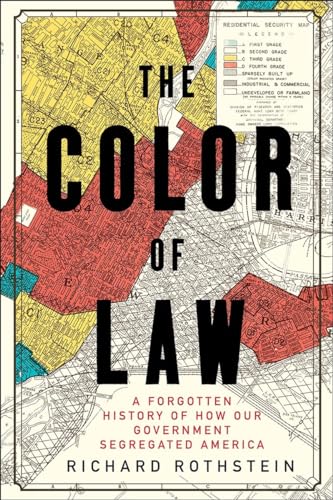
The Color of Law by Richard Rothstein describes how government policies imposed residential segregation through public housing, subsidies for whites-only suburbs, and support for violent resistance; Rothstein's account shows how government action shaped where people could live.

Book links are Bookshop.org affiliate links. Curiate may earn a commission on purchases, at no extra cost to you — Bookshop.org also gives a share to independent bookshops.
Reading paths, built to arrive somewhere
Curiate turns what you are curious about into a short path — a quick lesson on an article, something to watch, and a book to go deep on. Free to browse.