Deregulation fueled a telecom buildout that outran demand
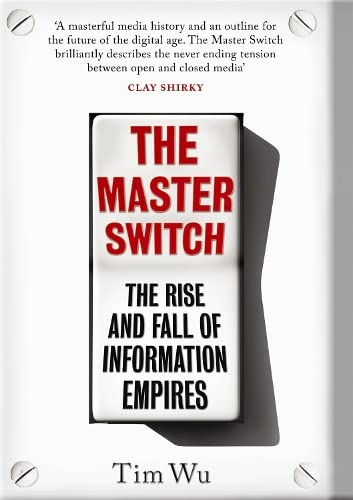
In the five years after the 1996 Telecommunications Act became law, telecom companies invested more than $500 billion in fiber-optic cable, switches, and wireless networks. How did deregulation and internet growth encourage this buildout, and why did competition make returns uncertain as capacity outstripped demand? The impact of the telecommunications boom in the 1990s was a stock market bubble that developed during the late 1990s and peaked on March 10, 2000. The Master Switch by Tim Wu traces how radio, telephone, television, and film began free and open before battles for domination and capture by monopolies or cartels.
2 articles, 1 book
The reading path
- BookThe Master Switch: The Rise and Fall of Information Empires · Bookshop.org
Congress enacted and President Clinton signed the Telecommunications Act of 1996 (Public Law 104-104). There was much fanfare at the time about how the law would usher in a golden age of competition, new technologies and services, multiple ways to receive television, and far lower prices, but the record since has been mixed. In the five years since the 1996 bill became law, telecommunications companies poured more than $500 billion into fiber optic cable, switches, and wireless networks. The 1996 law unleashed some more competition, and wireless networks grew unusually rapidly, contributing to the buildout as capacity outstripped demand.
- ReadThe Telecommunications Crash: What to Do Now · Brookings
The 1990s reforms aimed to create a deregulated telecom industry, with many firms generating entrepreneurial innovations and economic growth. The new consensus held that an industry once thought to be a natural monopoly-one expected to operate as a single provider-would flourish under competition. Telecom companies appeared to be building valuable assets for the information age: fiber-optic networks, routers and other equipment, satellites, wireless systems, and upgraded telephone and cable TV networks for high-speed Internet. Internet growth and deregulation made the boom look profitable, but competition meant returns were no longer guaranteed.
- ReadThe Great Telecom Implosion · The American Prospect
The Master Switch by Tim Wu describes how radio, telephone, television, and film began free and open, then faced battles for domination and capture by monopolies or cartels. Wu's history helps readers consider how openness and control have shaped information industries.

Book links are Bookshop.org affiliate links. Curiate may earn a commission on purchases, at no extra cost to you — Bookshop.org also gives a share to independent bookshops.
Reading paths, built to arrive somewhere
Curiate turns what you are curious about into a short path — a quick lesson on an article, something to watch, and a book to go deep on. Free to browse.