Geopolitics and the power of land and sea
Geopolitics is the study of how Earth's geography affects politics and international relations; at the international level, it uses geographical variables to study foreign policy and understand, explain, and predict international political behavior. How can control of strategic land and sea shape the power of states? The lessons show how geographic position and access to resources and routes can support influence and constrain rivals.
2 articles, 1 book
The reading path
- Readgeopolitics · Wikipedia
Sir Halford Mackinder, a British geographer and strategist, said, "Who rules Central and Eastern Europe commands the Heartland." His Heartland Theory hypothesized a huge empire in the Heartland, which essentially comprised Central and Eastern Europe: Ukraine, Western Russia, and Mitteleuropa, and contained Ukraine's grain reserves and many other natural resources; some thinkers have claimed that the theory subsequently influenced the foreign policies of world powers.
- BookPrisoners of Geography · Bookshop.org
Mahan, a naval officer and theorist of sea power, argued that maritime shipping and seaborne commerce gather wealth to maintain a strong navy, creating a virtuous circle for leading naval powers. Effective control over vital maritime choke points, bases, and ocean lanes could allow seagoing nations to project influence inland and constrain great land powers such as Russia, but that control would have to be exercised and maintained energetically.
- ReadCRB | Geography and World Politics, by Colin Dueck - Claremont Review of Books · Claremont Review of Books
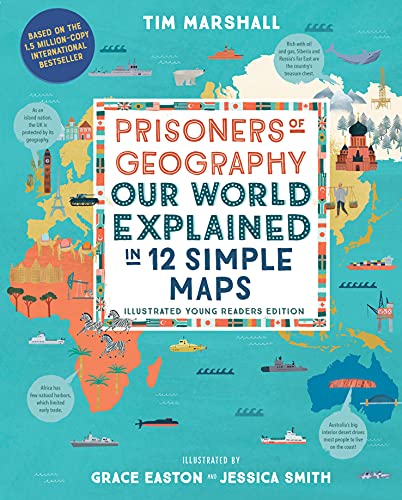
Prisoners of Geography by Tim Marshall follows past and present geopolitics through geography, challenging the belief that technology makes geography irrelevant to politics and conflict. Marshall argues that geography is often left out of accounts of conflicts and state development.


Book links are Bookshop.org affiliate links. Curiate may earn a commission on purchases, at no extra cost to you — Bookshop.org also gives a share to independent bookshops.
Reading paths, built to arrive somewhere
Curiate turns what you are curious about into a short path — a quick lesson on an article, something to watch, and a book to go deep on. Free to browse.