How abstract expressionism made painting an event
Abstract expressionism was a rebellious and idiosyncratic art movement that encompassed various artistic styles. It emerged in the United States after World War II and gained mainstream acceptance in the 1950s.
2 articles, 1 video, 1 book · about 54 min of reading and viewing
The reading path
- Readabstract expressionism · Wikipedia · 39 min read
Action painting, closely associated with abstract expressionism, was a term coined by American critic Harold Rosenberg in 1952. Rosenberg's concept shifted emphasis from the painting as an object to the painter's act of creation, with the canvas as "an arena in which to act". Jackson Pollock's technique has roots in the work of André Masson, Max Ernst, and David Alfaro Siqueiros, linking Abstract Expressionism to Surrealism's emphasis on spontaneous, automatic, or subconscious creation.
- Read"Abstract Expressionism – The Metropolitan Museum of Art" · metmuseum.org · 6 min read
In abstract expressionism, Pollock developed a radical new technique in 1947, pouring and dripping thinned paint onto raw canvas laid on the ground instead of applying pigment by brush to primed, stretched canvas on an easel. The works' subject matter, huge scale, and technique were shocking to many viewers.
- WatchAbstract Expressionism in 8 Minutes: From 'Jack The Dripper' to Color Fields 🔵🟡 · YouTube · 9 min watch
Abstract Expressionism rose to global popularity, and Jackson Pollock's art was radical enough to earn him the nickname 'Jack the Dripper'.
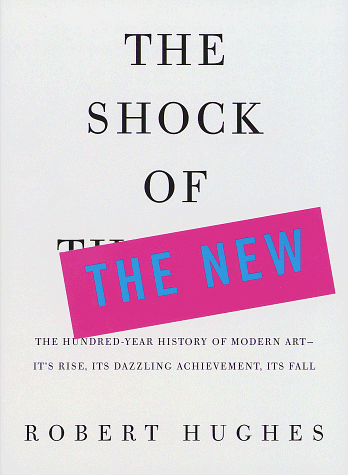
- BookThe Shock of the New · Bookshop.org
The Shock of the New is an eight-part documentary television series about the development of modern art written and presented in 1980 by Australian art critic Robert Hughes for the BBC, in association with Time-Life Films. Hughes also wrote a book to accompany the series.

Book links are Bookshop.org affiliate links. Curiate may earn a commission on purchases, at no extra cost to you — Bookshop.org also gives a share to independent bookshops.
Reading paths, built to arrive somewhere
Curiate turns what you are curious about into a short path — a quick lesson on an article, something to watch, and a book to go deep on. Free to browse.