How cognitive dissonance reshapes beliefs
Cognitive dissonance is psychological stress that can surface when actions, beliefs, attitudes, or behaviors conflict, or new information challenges existing beliefs. According to this theory, people automatically try to resolve the inconsistency, usually by reframing a side; the lessons explore some examples in choices, moral conflict, and changing attitudes.
2 articles, 1 video, 1 book · about 3 hr 21 min of reading and viewing
The reading path
- Readcognitive dissonance · Wikipedia · 60+ min read
Cognitive dissonance is psychological stress from conflicting beliefs, attitudes, or behaviors, or from new information that challenges existing beliefs. In a 1959 Stanford experiment, students who were paid one dollar rated tedious tasks more positively than students paid twenty dollars, and Leon Festinger and Merrill Carlsmith proposed that the paid students experienced dissonance between conflicting thoughts. In Post-decision Changes in Desirability of Alternatives (1956), 225 female students rated domestic appliances, chose one of two as a gift, and rated them again; they increased their ratings of the appliance they selected and decreased their ratings of the appliances they rejected, a pattern linked to cognitive dissonance after a difficult choice.
- Read"The Resilience of Radicalism: Strategies for reducing dissonance and sustaining extremist attitudes" · journal-derad.com · 7 min read
Interviews with former extremists identify dissonance characteristics and resolution strategies that help radicalized individuals sustain extremist attitudes. Understanding these mechanisms can inform interventions that inhibit defensive and reinforcing coping strategies and use cognitive dissonance to catalyze attitudinal change.
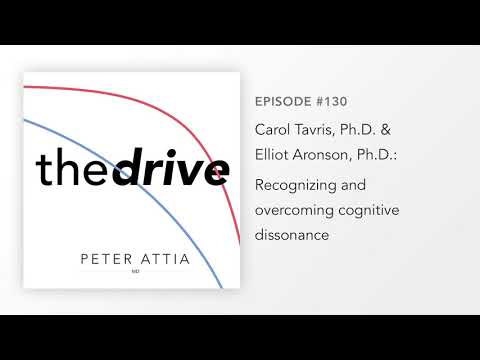
- Watch#130 - Carol Tavris, Ph.D. & Elliot Aronson, Ph.D.: Recognizing and overcoming cognitive dissonance · YouTube · 2 hr watch
Social psychologists Carol Tavris and Elliot Aronson discuss cognitive dissonance, self-justification, and how people try to reduce mental conflict, along with ways to recognize and overcome it.
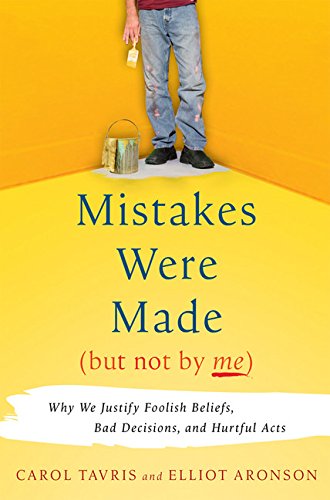
- BookMistakes Were Made (But Not by Me) · Bookshop.org
Mistakes Were Made (but Not by Me), by Carol Tavris, discusses cognitive dissonance and how perpetrators and victims of hurtful acts justify and rationalize their behavior.

Book links are Bookshop.org affiliate links. Curiate may earn a commission on purchases, at no extra cost to you — Bookshop.org also gives a share to independent bookshops.
Reading paths, built to arrive somewhere
Curiate turns what you are curious about into a short path — a quick lesson on an article, something to watch, and a book to go deep on. Free to browse.