How colonial rule shapes post-colonial politics
Post-colonial politics is the academic study of colonialism and imperialism's cultural, political and economic consequences, including their effects on colonized people and their lands. These lessons answer how colonial rule and its lasting effects can be understood. They consider the ideas and practices of domination and the ways colonial power continues to shape political and economic life.
2 articles, 1 video, 1 book · about 1 hr 34 min of reading and viewing
The reading path
- Readpost-colonial politics · Wikipedia · 44 min read
Trinh T. Minh-ha, a filmmaker and theorist of postcolonialism, uses her documentary film Reassemblage (1982) to attempt to deconstruct anthropology as a "western male hegemonic ideology." In Woman, Native, Other: Writing Postcoloniality and Feminism, she focuses on the acknowledgement of oral tradition. Frantz Fanon, a psychiatrist and philosopher, gives a clinical analysis of colonialism, the control of one people by another, as essentially destructive in The Wretched of the Earth (1961). Fanon writes that colonialism denies the colonized people "all attributes of humanity," and its imposition of a subjugating colonial identity harms native peoples' mental health. Nazih Ayubi's essay "Overstating the Arab State" (2001) examines how Western colonialism shaped psychologically fragmented postcolonial identity in the Middle East. European-drawn colonial boundaries overlooked tribal and clan relations that had defined borders before European imperialism, resulting in fragmented national identity.
- ReadColonialism (Stanford Encyclopedia of Philosophy) · plato.stanford.edu · 37 min read
The modern European colonial project emerged when it became possible to move large numbers of people across the ocean and maintain political control despite geographical dispersion. This entry uses colonialism to describe European settlement, violent dispossession and political domination across the Americas, Australia, and parts of Africa and Asia.
- WatchDecolonization and Nationalism Triumphant: Crash Course World History #40 · YouTube · 13 min watch
John Green teaches about the post-World War II breakup of most European empires, where violence often ensued as empires collapsed. The video presents India as an example of relatively non-violent change, in contrast with places such as the Congo, Egypt, Rwanda, Vietnam, Cambodia and Laos, where things did not go smoothly.
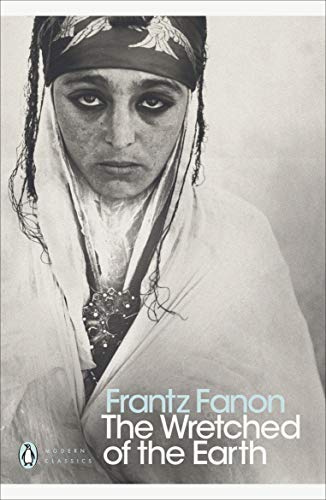
- BookThe Wretched of the Earth · Bookshop.org
The Wretched of the Earth by Frantz Fanon discusses the social, cultural, and political implications of decolonization; in "On Violence," Fanon describes colonialist leaders' offers of non-violence and compromise as an example of a decolonization movement weakened by their tentativeness.

Book links are Bookshop.org affiliate links. Curiate may earn a commission on purchases, at no extra cost to you — Bookshop.org also gives a share to independent bookshops.
Reading paths, built to arrive somewhere
Curiate turns what you are curious about into a short path — a quick lesson on an article, something to watch, and a book to go deep on. Free to browse.