How cultural exchange reshapes cultures over time
Cultural exchange and interaction is social and cultural contact among Muslims, Christians, and Jews who lived alongside one another in Iberia during Al-Andalus, contributing to a diverse culture that continued after the Reconquista. The lessons answer how contact reshapes cultures over time. They consider how cultural change unfolds through social, religious, and creative life.
2 articles, 1 book · about 24 min of reading and viewing
The reading path
- Readcultural exchange and interaction · Wikipedia · 21 min read
The Great Mosque of Córdoba shares architectural features with the Great Mosque of Damascus, and Byzantium artisans are believed to have taught these techniques to Andalusian artisans. Some of the original Byzantium artisans remained in Al-Andalus and became integrated into Andalusian society, while Christians and Jews adopted Arabic architectural elements in their churches and synagogues. Muwashshah is a type of musical poem. The Mozarabic style first appeared in its kharjas, or choruses, which were usually written in Arabic or Hebrew but eventually also appeared in vernacular Mozarabic, sometimes mixing phrases from the Iberian vernacular, Hebrew, and Arabic. This linguistic exchange contributed to the development of vernacular Romance languages. In Al-Andalus, converts to Islam had a greater ability to acquire wealth and status.
- ReadCultural Diffusion — AP World Definition & Exam Guide | Fiveable · fiveable.me · 3 min read
Syncretism is when a spreading belief blends with local culture instead of replacing it. Buddhism's diffusion to China led to Chan Buddhism, a Chinese-flavored version.
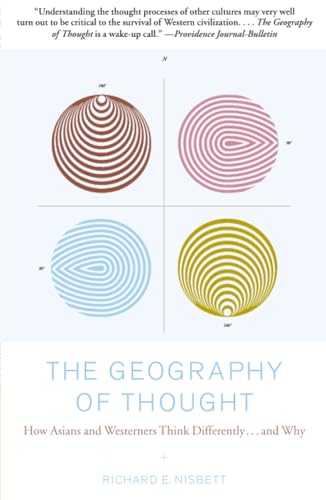
- BookThe Geography of Thought: How Asians and Westerners Think Differently...and Why · Bookshop.org
The Geography of Thought by Richard E. Nisbett argues that cultural differences affect thought processes and describes how differing ecologies, social structures, philosophies, and educational systems shape how people think about and see the world. Nisbett also argues that human behavior is a function of culture, not something "hard-wired".

Book links are Bookshop.org affiliate links. Curiate may earn a commission on purchases, at no extra cost to you — Bookshop.org also gives a share to independent bookshops.
Reading paths, built to arrive somewhere
Curiate turns what you are curious about into a short path — a quick lesson on an article, something to watch, and a book to go deep on. Free to browse.