How cultural representation in media flattens identities
Cultural representation in media is how African Americans are represented in speech, writing, and visual forms, as one part of media bias in the United States. Research on prime-time television from 1955 to 1986 found that only 6 percent of characters were African American, while 89 percent of the TV population was white. The lessons consider how repeated stereotypes flatten complex identities and shape representation.
2 articles, 1 book · about 54 min of reading and viewing
The reading path
- Readcultural representation in media · Wikipedia · 21 min read
In cultural representation in media, the "coon" stereotype portrayed Black people as lazy, cowardly, foolish, and buffoonish. Emerging in the 19th century, it reinforced ideas of Black incompetence and was widely used in minstrel shows and early American film. A 2011 study by The Opportunity Agenda found that negative portrayals of Black men in television, newspapers, and video games contributed to societal bias. These depictions often linked Black men with crime, violence, and moral failure, influencing public perception, reinforcing harmful stereotypes, and correlating with health disparities like lower life expectancy. Cultural representation in media remains uneven at its upper levels: during the 2013 to 2014 season only 5.5 percent of executive-level television producers were people of color.
- ReadBeyond stereotypes: representations of a foreign culture in film students' productions · literator.org.za · 33 min read
In Media Studies, stereotypes refer to "the continuous repetition of ideas about groups of people in the media." McQueen (1998:141, cited in Bernstein, 2002:265) describes taking an easily grasped feature or characteristic assumed to belong to a group and making it representative of the whole group.
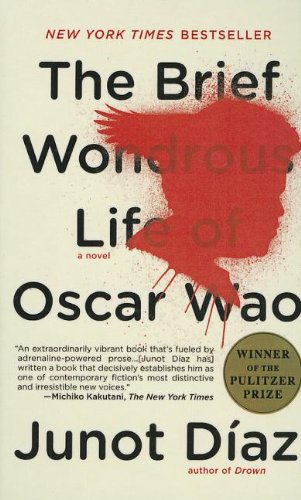
- BookThe Brief Wondrous Life of Oscar Wao · Bookshop.org
The Brief Wondrous Life of Oscar Wao by Junot Díaz chronicles Oscar de León's life and mediates storytelling, the Dominican diaspora, identity, sexuality, and oppression through multiple narrators, Spanglish, and references to fantasy and science fiction.
Book links are Bookshop.org affiliate links. Curiate may earn a commission on purchases, at no extra cost to you — Bookshop.org also gives a share to independent bookshops.
Reading paths, built to arrive somewhere
Curiate turns what you are curious about into a short path — a quick lesson on an article, something to watch, and a book to go deep on. Free to browse.