How Dejima reshaped Japanese learning and medicine
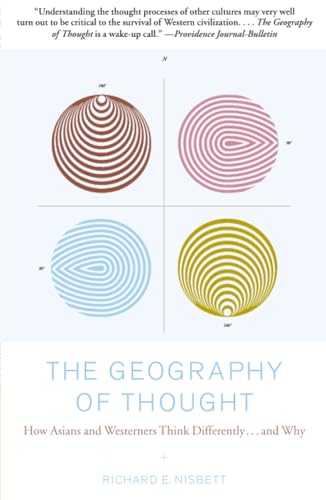
Dutch East India Company staff sold over 10,000 foreign books to the Japanese from the late 18th to early 19th century, fueling the growth of Rangaku. How does contact with other cultures reshape what people keep and blend into their own traditions? Rangaku was the growth of Japanese learning from foreign books. The Geography of Thought by Richard E. Nisbett argues that culture shapes thought and human behavior through ecologies, social structures, philosophies, and educational systems.
2 articles, 1 book
The reading path
- BookThe Geography of Thought: How Asians and Westerners Think Differently...and Why · Bookshop.org
Dejima was an artificial island off Nagasaki, Japan, and a trading post for the Portuguese (1570 to 1639) and subsequently the Dutch (1641 to 1858). For 220 years, it was the central conduit for foreign trade and cultural exchange with Japan during the isolationist Edo period (1600 to 1869), separating European merchants from Japanese society while facilitating trade with the West. After US Navy Commodore Perry forced Japan open in 1854, the Bakufu suddenly increased its interactions with Dejima, an artificial island off Nagasaki that served as a Dutch trading post, to build knowledge of Western shipping methods. In 1855, the shōgun's government established a naval training center at Dejima to enable interaction with Dutch naval know-how, and the Netherlands gave the center Japan's first steamship, the Kankō Maru.
- ReadDejima · Wikipedia
Dutch East India Company staff sold over 10,000 foreign books to the Japanese from the late 18th to early 19th century, fueling the growth of Rangaku. The book trade carried learning across cultures. German physicians Engelbert Kaempfer, Carl Peter Thunberg and Philipp Franz von Siebold researched Japanese culture, flora and fauna at Dejima and helped advance Western medicine in Japan. Their work made the physicians cultural intermediaries in the exchange of science and medicine.
- ReadDejima: The Dutch Trading Post That Was Japan's Window to the World · Japan Experience
The Geography of Thought by Richard E. Nisbett argues that culture shapes thought and human behavior, describing how ecologies, social structures, philosophies, and educational systems shape how people see the world.

Book links are Bookshop.org affiliate links. Curiate may earn a commission on purchases, at no extra cost to you — Bookshop.org also gives a share to independent bookshops.
Reading paths, built to arrive somewhere
Curiate turns what you are curious about into a short path — a quick lesson on an article, something to watch, and a book to go deep on. Free to browse.