How financial modeling for startups tests assumptions
Financial modeling for startups means building a mathematical, simplified representation of a business's financial performance. The lessons answer how models can serve as testable business assumptions, helping readers understand what projections depend on and how different conditions may affect them. They consider the role of assumptions, uncertainty, and scenarios in assessing a startup's financial outlook.
2 articles, 1 book · about 30 min of reading and viewing
The reading path
- ReadHow to Create a Financial Model That Secures Funding · qubit.capital · 15 min read
For startup investors, a financial model assesses whether a business can generate sustainable returns, evaluates risks and mitigation strategies, gauges growth potential, and checks whether projections rest on realistic, well-founded assumptions. In startup financial modeling, scenario analysis creates multiple financial projections from varying assumptions to show how different situations affect a business. It demonstrates a startup's resilience and adaptability under various conditions.
- Readfinancial modeling for startups · Wikipedia · 15 min read
Complex financial models may result in incorrect pricing or hedging, or both. Finance academics continue to research this model risk, which is of growing interest in risk management.
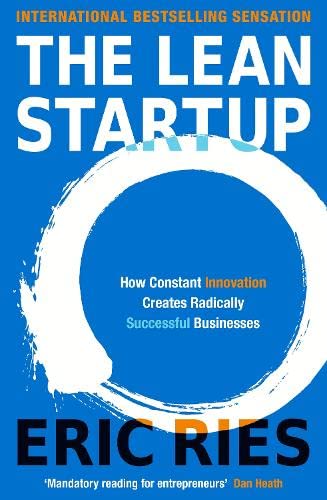
- BookThe Lean Startup · Bookshop.org
The Lean Startup by Eric Ries describes how startups can use validated learning and rapid scientific experimentation to measure actual progress, learn what customers want, and adjust plans.

Book links are Bookshop.org affiliate links. Curiate may earn a commission on purchases, at no extra cost to you — Bookshop.org also gives a share to independent bookshops.
Reading paths, built to arrive somewhere
Curiate turns what you are curious about into a short path — a quick lesson on an article, something to watch, and a book to go deep on. Free to browse.