How historical linguistics traces language diversification
Historical linguistics is the scientific study of how languages change over time, seeking to understand the nature and causes of linguistic change and trace the evolution of languages. The lessons answer how languages diversify over time and help readers understand the processes behind that diversification.
2 articles, 1 video, 1 book · about 42 min of reading and viewing
The reading path
- Readhistorical linguistics · Wikipedia · 11 min read
Historical linguistics uses several methods to date proto-languages, meaning unrecorded earlier forms of languages, but the process is generally difficult and its results are inherently approximate. In historical linguistics, English sing ↔ sang ↔ sung is the remnant of the regular Indo-European ablaut system of internal vowel changes. Synchronically, speakers process these strong-verb forms as learned forms, unlike regular verbs such as walk → walked, which are formed by a productive rule. Etymologists use comparative linguistics to reconstruct information about languages too old for direct information, such as writing, to be known. Comparing related languages helps linguists infer their shared parent language and vocabulary.
- Read"The Linguistic Diversity of Aboriginal Europe" · languagelog.ldc.upenn.edu · 19 min read
All languages change slowly but steadily over time, and when parts of a speech community stop communicating, different changes accumulate on either side of the barrier, so a single language can become two or more.
- WatchLanguage Change and Historical Linguistics: Crash Course Linguistics #13 · YouTube · 12 min watch
Languages change, and contact between languages changes them too. Linguists piece together a language's history.
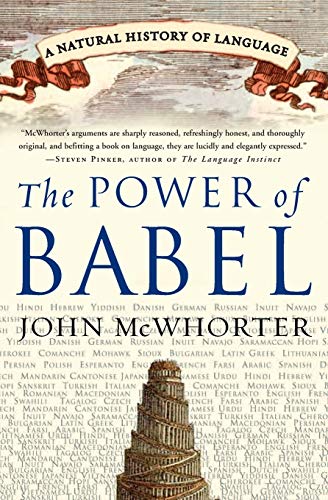
- BookThe Power of Babel: A Natural History of Language · Bookshop.org
The Power of Babel by John H. McWhorter treats language evolution like natural selection: languages morph over time due to environmental factors and may absorb characteristics with no useful purpose. McWhorter argues that an evolved language is not inherently less complex or more civilized than a "primitive" language.

Book links are Bookshop.org affiliate links. Curiate may earn a commission on purchases, at no extra cost to you — Bookshop.org also gives a share to independent bookshops.
Reading paths, built to arrive somewhere
Curiate turns what you are curious about into a short path — a quick lesson on an article, something to watch, and a book to go deep on. Free to browse.