How light and pigments shape color theory
Color theory is a historical body of knowledge about how colors behave in mixing, contrast, harmony, schemes, and symbolism. The lessons answer how light and pigments make color, helping readers understand how color arises and how different ways of mixing it shape what we see. They connect the behavior of light with the behavior of pigments.
2 articles, 1 video, 1 book · about 43 min of reading and viewing
The reading path
- Readcolor theory · Wikipedia · 20 min read
Traditional color theory was built around "pure" or ideal colors, characterized by different sensory experiences rather than attributes of the physical world. This led to inaccuracies in traditional color theory principles that are not always remedied in modern formulations. Modern color science does not recognize universal primary colors: no finite combination of colors can produce all other colors. Any three primary colors mix only a limited range, called a gamut, smaller than the full range humans can perceive. In color theory, mixtures of two primary colors are more saturated than mixtures of two secondary colors when each pair is equally far apart on the hue circle. For example, magenta and cyan inks or paints produce vivid blues and violets, while red and blue produce darkened violets and purples.
- ReadA short history of color theory - Programming Design Systems · programmingdesignsystems.com · 14 min read
Isaac Newton, whose Opticks redefined conventional theories about light, found that spectral colors could be recombined into white light. This showed that white light contains colors across the spectrum.
- WatchCOLOR THEORY basics FOR FASHION | Justine Leconte · YouTube · 9 min watch
Complementary and analogous colors are color relationships that can be combined when designing a collection or choosing an outfit.
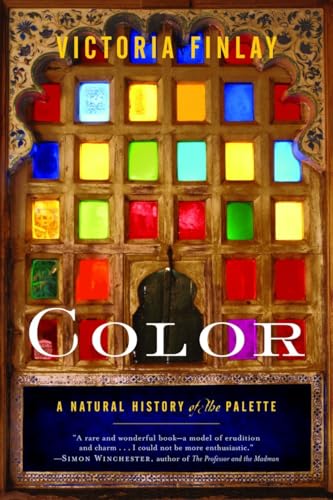
- BookColor: A Natural History of the Palette · Bookshop.org
Color by Victoria Finlay reports that the blue "ultramarine" paint used by Michelangelo was extracted from an Afghan mine and so expensive he couldn't afford to buy it himself.


Book links are Bookshop.org affiliate links. Curiate may earn a commission on purchases, at no extra cost to you — Bookshop.org also gives a share to independent bookshops.
Reading paths, built to arrive somewhere
Curiate turns what you are curious about into a short path — a quick lesson on an article, something to watch, and a book to go deep on. Free to browse.