How modern physics revises the fundamentals of physics
The fundamentals of physics is the scientific study of matter, its basic parts, how it moves and behaves through space and time, and energy and force. What changes when modern physics revises our understanding of reality, and how can we make sense of those changes? The lessons trace how ideas about the physical world develop across scales and theories.
3 articles, 1 video, 1 book · about 52 min of reading and viewing
The reading path
- Readthe fundamentals of physics · Wikipedia · 40 min read
Aristotle's physics held that each of the four classical elements, air, fire, water, and earth, had its own natural place. He said that when a small amount of one element enters another's natural place, it automatically moves toward its own, explaining how his account described the elements' behavior. Blackbody light is light from hot glowing objects. Its intensity did not match the predictions of thermodynamics and electromagnetism, and these failures, seemingly insignificant in the big picture, would upset the physics world in the first two decades of the 20th century. Ibn al-Haytham presented light rays as an alternative to the ancient Greek idea about visual rays in his Book of Optics (also known as Kitāb al-Manāẓir). Like Ptolemy, Ibn al-Haytham applied controlled experiments, verifying the laws of refraction and reflection with light rays, but still lacking the concept of image formation.
- ReadMatter vs. Force: Why There Are Exactly Two Types of Particles | Quanta Magazine · Quanta Magazine · 4 min read
In quantum physics, Bose and Einstein's math described how multiple particles can be perfectly alike, sharing the same charge, mass and energy and even existing in the same place at the same time. Photons, the particles of light, behave this way.
- ReadQuantum computer simulates matter "popping into existence" · ScienceDaily · 4 min read
In fundamental physics, string breaking models how matter can form: pulling apart two connected building blocks of matter builds up energy until new particles can effectively "pop into existence" when the connection breaks. Duke Quantum Center researchers used a quantum simulator to observe string-breaking dynamics connected to particle-antiparticle formation, a process linked to the early universe.
- WatchWhat is a Force? · YouTube · 4 min watch
Everyday talk about force is not the same as its scientific meaning. In physics, force matters because it helps determine how an object moves.
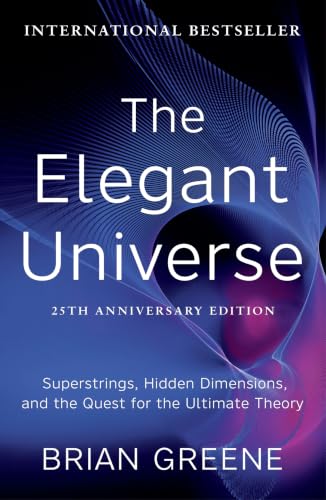
- BookThe Elegant Universe · Bookshop.org
The Elegant Universe by Brian Greene vividly describes string theory's vision of the universe and the shock waves it is sending through the world of physics.


Book links are Bookshop.org affiliate links. Curiate may earn a commission on purchases, at no extra cost to you — Bookshop.org also gives a share to independent bookshops.
Reading paths, built to arrive somewhere
Curiate turns what you are curious about into a short path — a quick lesson on an article, something to watch, and a book to go deep on. Free to browse.