How nihilism in 19th century Russia revolted against inherited values
The Russian nihilist movement was a philosophical, cultural, and revolutionary movement in the Russian Empire, arising among young radicals disillusioned with earlier social reformers and divided from old aristocratic intellectuals. The lessons answer how nihilism became a revolt against inherited values. They trace how generational change and political conditions shaped this challenge to established beliefs.
2 articles, 1 book · about 1 hr 44 min of reading and viewing
The reading path
- Readthe rise of nihilism in 19th century russia · Wikipedia · 51 min read
In 1862, Ivan Turgenev's celebrated novel Fathers and Sons popularized nihilism to describe the disillusionment of the generation of the 1860s towards both traditionalists and the progressive reformists that came before them. Turgenev's nihilist characters took up the name of their own volition, stating that negation is the most necessary thing in the present age and that they deny everything. In the rise of nihilism in 19th century russia, Bazarovism was the embrace of the style and cynicism of Yevgeny Bazarov, the nihilist character in Ivan Turgenev's Fathers and Sons. Dmitry Pisarev popularized Bazarovism. Raznochintsy, or "educated commoners," had a connection to the new radicals that has often been emphasized in comparison to the dominance of aristocratic intellectuals in previous generations. As early as the 1840s, the raznochintsy gained significant influence over Russian society and culture, and the intelligentsia of this class came to be synonymous with the "revolutionary intelligentsia".
- ReadNihilism, Anarchy, and the 21st Century · theanarchistlibrary.org · 53 min read
Nihilism was a particularly Russian response to the conditions of Tsarist reform and repression.
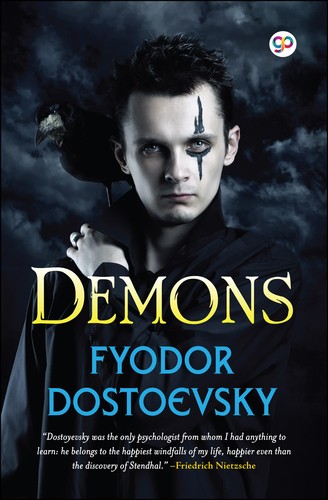
- BookDemons · Bookshop.org
Demons by Fyodor Dostoevsky was conceived as a "novel-pamphlet" about the plague of materialist ideology Dostoevsky saw infecting his native land, inspired by a political murder that horrified Russians in 1869.

Book links are Bookshop.org affiliate links. Curiate may earn a commission on purchases, at no extra cost to you — Bookshop.org also gives a share to independent bookshops.
Reading paths, built to arrive somewhere
Curiate turns what you are curious about into a short path — a quick lesson on an article, something to watch, and a book to go deep on. Free to browse.